
Manchester looks like the perfect place for Romanian students and artists, and Adina Nelu is one of the perfect examples.
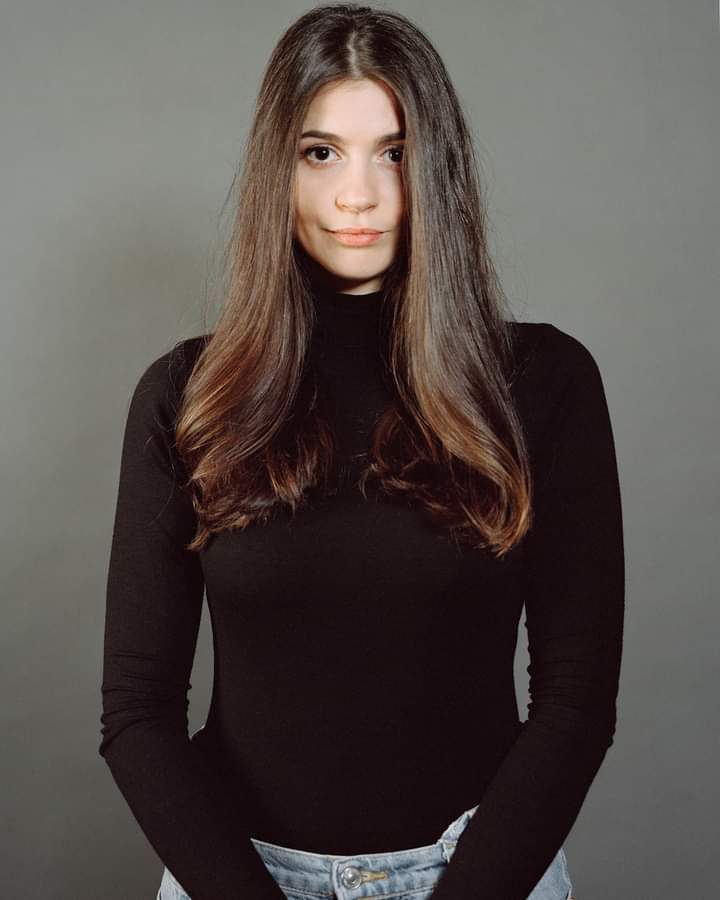
After finishing BA at the National University of Music in Bucharest, she moved to UK for her MA at the University of Salford.
During this time, she composed new music and promoted the culture of her home country, especially the poems of the great Romanian poet Mihai Eminescu.
We tried to find out more about her career, goals and opinion in an exclusive interview for our publications.
How and when did the contact with music begin?
I think I was 5 years old when my mum realised – or decided – that I had an aptitude for music. She enrolled me into an arts school at 9 and, since then, I studied music until the age of 24. I finished Dinu Lipatti Arts college, got my BA at the National University of Music in Bucharest, and my MA at the University of Salford, where I’ve been teaching Applied Composition.
During that time, I tried everything: I was a flautist, pianist, songwriter, backing vocalist, lyricist, chorister and, finally, composer for film and media. I think a film composer needs to show versatility and elasticity in their aesthetic choices and they shouldn’t be biased when it comes to style. Perhaps that’s why this role was so suitable for me: it allowed me to combine all these musical roles that I found myself in throughout the years.
You were backing vocalist for Paula Seling and still collaborate for translations of songs. What did you learn from this collaboration? What Romanian musicians\bands would you like to collaborate with in the future?
Paula is an exceptional person and artist. The fact that she trusted me and put me on stage next to her has changed me a lot as a musician, but mostly as a person. Our collaboration continued remotely because we connected so well. I won’t go into detail, ‘cause I’ll start missing her again.
I’d like to collaborate with YCCMD. Look him up!
You have decided to leave Romania to study for a master’s degree in England. Why did you make this decision?
Leaving the country was a very hard decision. At the time, I was still performing with Paula, to whom I had gotten very attached, and I was about to graduate my BA course. My brother was finishing his studies in Manchester and he kept suggesting me to go there, but I didn’t want to. He eventually convinced me, as we both felt that my creative direction wasn’t going to develop into a sustainable career in Romania. Here, I was offered opportunities that I wouldn’t have gotten back home, where, unfortunately, education and culture don’t seem to be a priority at the moment.
What was the most important moment in your career so far?
Back in February, I was selected by New Creatives, a talent development scheme co-funded by BBC Arts and Arts Council England, to create an experimental piece. The deadline was in June, but, because I couldn’t access the facilities they were offering, the production got postponed during lockdown. The project is addressed to the UK audiences and it sheds a light on the Pitești Phenomenon, the re-education experiment that happened in my hometown in the early days of communism.
Another success was that I was offered to teach Applied Composition & Technology to over 100 students at the University of Salford, where I studied for my Master’s. Their trust in me helped me re-evaluate those little professional insecurities that we all have, especially the ones that weren’t constructive.
You have been invited by the Greater Manchester Combined Authority to compose a song about the effects of the pandemic. How did you feel at that moment?
First of all, it made me feel like I belonged – that feeling that I’m not a local didn’t go away, but it faded with time. The fact that this city – iconic in recent music history – recognised and appreciated my work felt like a confirmation.
Secondly, I was very excited that my project will forever be part of a cultural archive that documented the effects of such a significant global event.
My piece was developed into an EP called ‘The Heavy Now’ and is now available on all streaming platforms.
What are your plans for this year? But for the next 5-10 years?
This year I worked on some projects that I’m very excited to release in the near future. For example, I wrote two pieces for Tibi Clenci’s photography, inspired by Romanian folk. I also worked on a feature film that is due to premiere later this year, and so is the music.
I’m currently working with DoR (Decât o Revistă) on a project that is so different than anything I’ve worked on so far. We are launching it mid-September and it’s something extremely necessary in today’s Romania. The fact that I’m involved in this project is a professional and personal achievement for me.
It’s hard to tell where I’ll be in the next 5 years. 5 years ago, I wouldn’t have thought I’d leave the country!
How is Romanian culture seen and, especially, Romanian music in England from your perspective?
Whenever possible, I tried bringing forward my cultural identity. I gave presentations, I brought up Romanian examples in my seminars, I integrated folk elements into my music and, for my Master’s Dissertation, I wrote an EP inspired by Eminescu’s poetry. All of these have been welcomed by the community here. Romanian culture and traditional music have always caught the attention of the West, even more so than our own. Just have a listen to what Prince Charles has to say about it.
How do you see the evolution of music in Romania?
I’m glad that there is now a space for different music, music that is harder to define. For example, my Eminescu-inspired EP is far from being mainstream – spoken word and byzantine modes. Even so, it found a niche audience that could appreciate it.
Lately I’ve been noticing more and more Romanian artists that are unconventional, diverse and creative. I think the future of Romanian music is safe with them 🙂
More and more rock\metal bands from Romania have concerts at major festivals in the UK or are invited to perform concerts in the UK. How do you feel about this?
When I was 17 and performing in an alternative rock band, my dream was to play Wembley Stadium. Actually, that was my 10-year plan, to refer back to your earlier question – I only have one year left! 🙂
Jokes aside, I’m really glad this is happening. I hope they get as far as possible, even on Wembley!
What advice do you have for the musicians from Romania, who are affected by the pandemic?
I know that many artists and industry professionals have been affected by the pandemic both financially and mentally – I am one of them. I’m no wellness expert, but I do know that a strict routine combined with a constructive mind set can help. Where possible, I think this time should be invested in the future, dedicated to reinvention and to self-education.
What message or advice do you have for young talents in Romania?
Work on your own standards and use them as a main reference point. Learn to recognise unconstructive criticism.
Don’t idealise fame for the sake of fame, it’s important that you find your motivation in a cause you believe in. For example, only 6% of the composers that worked on last year’s top 250 grossing films were women.
My motivation is that I may contribute, somehow, to fixing those stats. I say “somehow” because I don’t claim to be Oscar-worthy material, but maybe a female composer that hasn’t been born yet will one day hear my music, decide that’s what she wants to do in life, and get farther in the industry than I’ve ever gotten. It’s simple.
Do you have a message for those who will read this interview?
It’s highly possible that your favourite song hasn’t been written yet. Keep supporting independent artists and you may get to hear it one day. 🙂
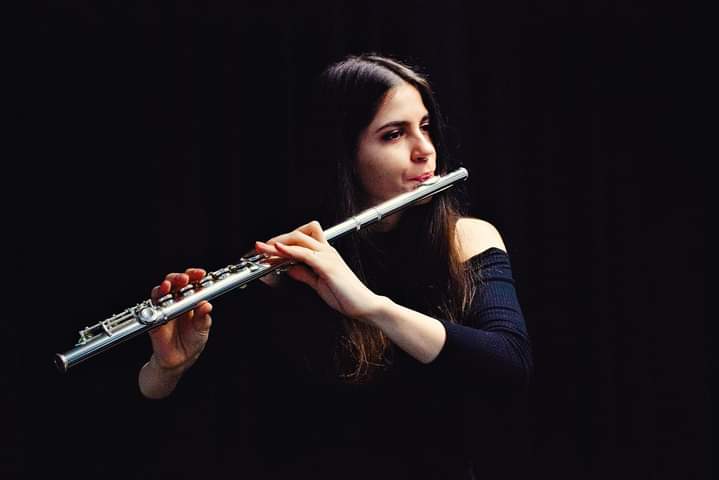
We would like to thank her for this interview and we invite you to listen to her creations!
You can find her on:
Interview by Radu Mihai
Questions translated by Laura Lucaci
 Rock Monsters Romania
Leave a comment