
by Eduard Istrate
DISCLAIMER: everything I say from now on should be treated as an opinion, unless specified otherwise.

I truly believe “The Wall” is the greatest piece of music ever made. Not the greatest of its era, not the greatest of its century. It is the greatest musical creation since music has been a thing. In spite of it being my favorite album, I actively avoid listening to it. I know what type of emotions it evokes in me, and I am never truly ready to feel them.
To begin with, I suggest you listen (REALLY listen) to the album before you continue reading. Listen to it from start to finish (more on that later). You can only do it for the first time once. I don’t want to steal that experience from you. DON`T put it on “shuffle” mode, the order of the songs matters a lot. Also, I recommend you try to give it your own meaning for the first listen, since Genius tends to spoil the fun of trying to solve the puzzle (after you have given it a try, Genius is a great tool to use for learning more about the story). Another thing you can do after you listen to the album is to watch the movie. It does an amazing job at portraying the story.
I will continue to comment on the album by going through it song by song. While I realize this makes for a pretty lengthy piece of writing, it is important to do so. The album follows a narrative. Every song plays a role in building the story. So, I say we begin.
“…we came in?”
In the flesh?
An instrumental introduces us to the protagonist of the story, in a way which resembles how a dictator might be welcomed on stage. The lyrics already tell us that there is something hiding inside of him that we can only find out by seeing through the mask which he puts on. The protagonist is a performer, indicated by the fact that he is talking to his audience at a concert (this event will be important later). The bone-chilling sounds of airplanes, bombs and tanks create an atmosphere of uncertainty and give us a taste of the complex themes about to be put forward by the album.
Then, they stop. We hear a crying baby.
The Thin Ice
This is where the story really begins, with the main character as a baby. The first part of the song is his mother is singing him a lullaby, while the second consists of advice about life. I could never do these lyrics justice by explaining them. The part about “skating on the thin ice of modern life” is so meaningful and true that no explanation could ever suffice. A dramatic guitar solo takes us to the next song.
Things start to get real here.
Another Brick in The Wall, Part 1
“Daddy’s flown across the ocean / Leaving just a memory / A snapshot in the family album / Daddy, what else did you leave for me?”. When I heard these lyrics for the first time, it felt like they stabbed me in the chest. Here, it is revealed that the protagonist’s father died in war. The absence of his father becomes one of the main themes of the album. This is the first time we hear the phrase “brick in the wall”. What the wall is will become clearer and clearer as the story progresses. It is also worth mentioning that the instrumental section of this song is especially beautiful and calming, but it also builds the tension necessary for the following sections. We then hear children playing. A helicopter sound freezes the story, as if it’s guarding the children.
“Stand still, laddie!”
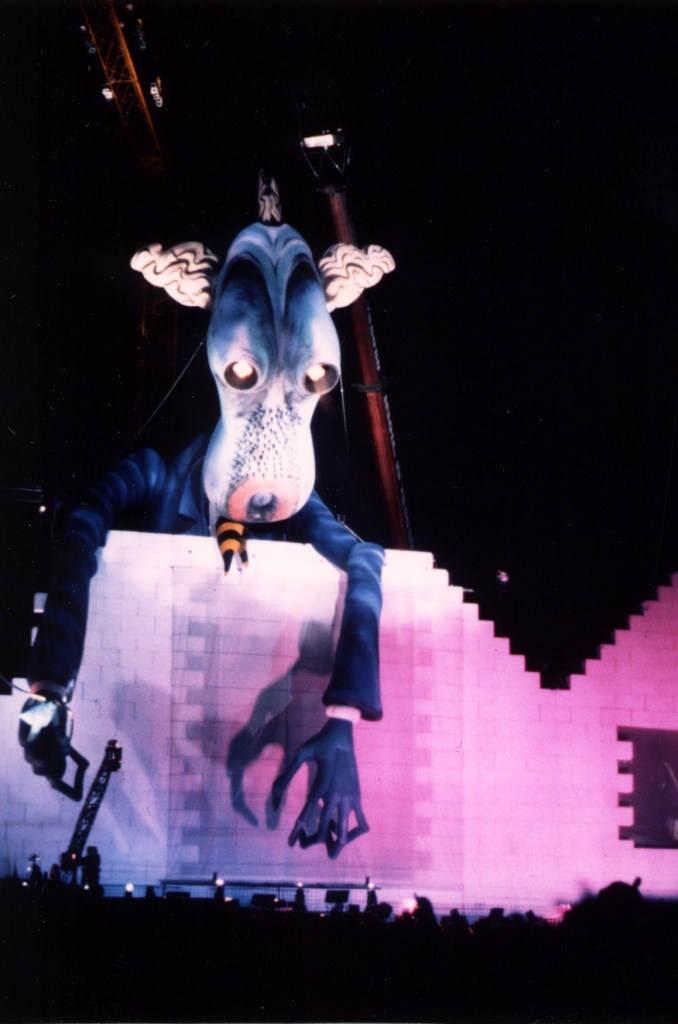
Photographer: Frank Dumont
The Happiest Days of Our Lives
While the previous song was about fatherlessness, this song introduces us to a different kind of trauma: school. The lyrics are very expressive and direct. This, in contrast with other more metaphorical lyrics on the album, creates a strong feeling of rebellion and seriousness. The epic, uplifting instrumental guides us to the next song.
I think you might know this one.
Another Brick in The Wall, Part 2
One of the most iconic songs of all time, “Another Brick in The Wall, Part 2” has become a world-famous anthem of rebellion against school. In the context of the album, we start to understand that the “bricks in the wall” represent traumas. They stack up on each other, building a wall. This is the central metaphor of the album and is what guides the whole narrative. In the second half of the song, David Gilmour plays one of the most recognizable guitar solos of all time. To understand how good of a guitarist he is, it is important to note that this album contains multiple contenders for “the best guitar solo of all time”. Multiple. In one album.

Photographer: Stefano Vigorelli
Fun fact: Mark Zuckerberg once asked to license this song for an ad promoting Instagram. To put it lightly, he was rejected.
Mother
Although musically it sounds like a happy song about the protagonist’s mother, the lyrics describe her as very overprotective. The opening line “Mother, do you think they’ll drop the bomb?” is especially chilling, considering the fact that the main character’s father died in battle (the album was written during the cold war, nuclear apocalypse was seen as a real possibility back then). The mother is revealed later in the song to actually help build the protagonist’s wall, out of the desire to protect him. We also find out that the protagonist has a wife when he asks “Mother, do you think she’s good enough?”.
The album then takes a very dark turn.
Goodbye Blue Sky
This song is about war. More specifically, about how the protagonist remembers it from his childhood. His heartbreaking childish understanding of war is reflected in the tone of the lyrics. He did not understand much about war, but he knew people died in it. And he knew that well. The melody also contributes to creating a feeling of stolen innocence. The guitar fades out, leaving room for the next part of the story.
Remember his wife? Things are not going so well.
Empty Spaces
Introduced by one of the best instrumental breaks on the album, the few lyrics on this song convey a strong feeling of emptiness. It is quite difficult to figure out who the main character is addressing here, since his wife’s character has only been mentioned once before this song (this is in no way a critique. Solving small riddles like this is what makes the listening experience so captivating). They are growing apart from each other. The wall continues to get bigger.
I have a feeling there is a secret hidden somewhere in this song… maybe you’ll find it 😉
Young Lust
The main character is now a rockstar. Around this fact, he creates a “cool guy” persona for himself and engages in classic young rock and roll star activities. The song is also a parody of some of Pink Floyd’s contemporary artists, who would frequently write songs about “the rockstar life” and have amazing success. Because of his loneliness, he seeks out superficial things to “make him feel like a real man”. In the ending of the song, he tries calling his wife, but to no avail. From this call we find out that the protagonist’s name is Floyd (safe to assume by now that his full name is Pink Floyd).
A man keeps picking up. Why would a man answer Mrs. Floyd’s phone? Oh…
One of My Turns
After another dark twist in his life, Pink invites a groupie to his hotel room. For a good while, Pink is weirdly silent and the girl becomes concerned for him. After a monologue about his disastrous love life, he has an emotional breakdown, completely trashing the room and chasing the groupie away. The instrumental magnificently expresses the atmosphere from Pink’s point of view: although he is emotionally erupting, he is free.
He immediately regrets chasing the girl away. He is completely lonely now.
Don’t Leave Me Now
Here we start to see that Pink is not that good of a person. In an inner conversation with his adulterous wife, he constantly makes it clear that he does not want her because of his love for her. He wants to use her for his needs. The lyrics also reference the fact that Pink enjoyed abusing his wife, mentally and physically. His broken character is a result of the traumatic experiences he has been through: the bricks are continuing to stack up.
What follows is the climax of the album.
Another Brick in the Wall, Part 3
The sound of TVs getting smashed highlight Pink’s descent into madness. The melody, intentionally similar to “Another Brick in the Wall, Part 1”, guides us to the conclusion that he is adding more bricks to the wall. Pink accepts isolation. We now have a complete understanding of what the wall is. Pink has been stacking bricks (traumas) on top of each other, forming a wall of isolation. It has been growing bigger and bigger, isolating Pink more and more. Once he finishes building the wall, he will be trapped there.
This is it. The last brick in the wall.
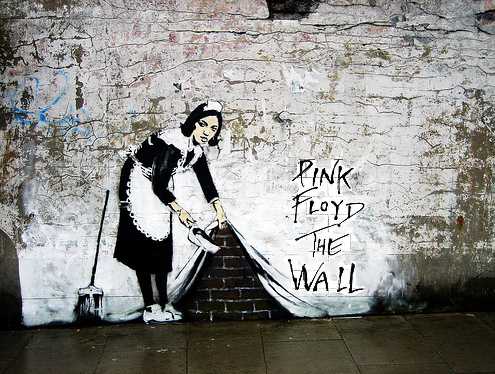
Goodbye Cruel World
This song marks the end of the first part of the album. If you somehow managed to listen to the album up to this point without shedding a tear, “Goodbye Cruel World” will probably change that. Pink is now completely trapped. The wall is complete.
Goodbye.
In the beginning, I suggested that you listen to this album from start to finish. I specified that I will elaborate on this further because there are multiple endings to it.
“The Wall” is a double album. On vinyl, it is split into two disks. The first disk ends with “Goodbye Cruel World”. What this implies is pure genius:
If you listen to the album on a vinyl record player (this is what the album was originally intended for), after “Goodbye Cruel World” concludes the first disk, you have to physically go and switch it with the second one. It is your choice whether you want to listen to the rest of the album or not. It is your choice whether this is the end of Pink’s story or not. If you want to, this can be the end of the album and Pink stays trapped behind the wall for the rest of his life. Pink Floyd (the band, not the character) took the physical limitations of vinyl and turned them into the greatest example of meta storytelling ever made in music.
The reason why I am splitting this article in half is to give you that same choice. If you feel like this story goes on, go and read the second part. I do have times when I feel like this is where the story ends. If you do too, maybe come back another time. This album helped me build my conception about art. To this day, my definition of art is “the feeling I get when I listen to “The Wall”. More on that in the second part. There, I will also give you some of my more general opinions about the album.
There is no way for me to explain to you how much this album means to me. Thank you very much for reading. See you outside the wall.

Photographer: Andy Mabbett

 Rock Monsters Romania
Leave a comment