

Photos by Toma Hurduc
Everything I knew about Alex Suciu before I had a real conversation with him was that he’s that drummer guy who seems funny online with his news and way of presenting himself. From the conversations at concerts that I had with him, I realized that he is, in fact, a somewhat shy person, but with a lot of common sense. Plus, it annoyed me every time he greeted me with “Sărut-mâna” (a traditional Romanian greeting meaning “I kiss your hand”). I wonder if the elderly neighbor on the second floor of the building from my childhood felt the same way when I said it to her? Maybe I’ll never know, but it doesn’t bother me.

I went into this interview with very few expectations. I thought it would be the kind of conversation like ‘I did this, I won that, I played there,’ etc., kinda boring if you want but it wasn’t like that at all. I actually got to know a person. A person with flaws, who wasn’t afraid to open up, and for that, I thank him again; it felt like a conversation between friends, nothing rigid or over the top. And now that I’ve bored you with all this, let me give you some insights.
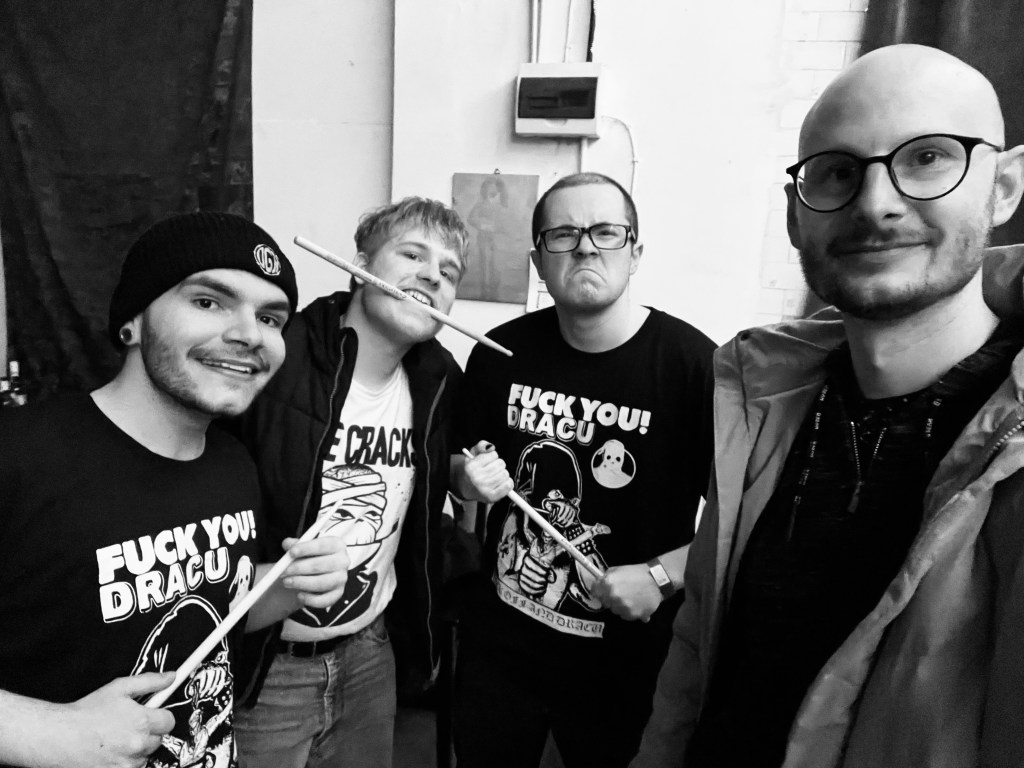
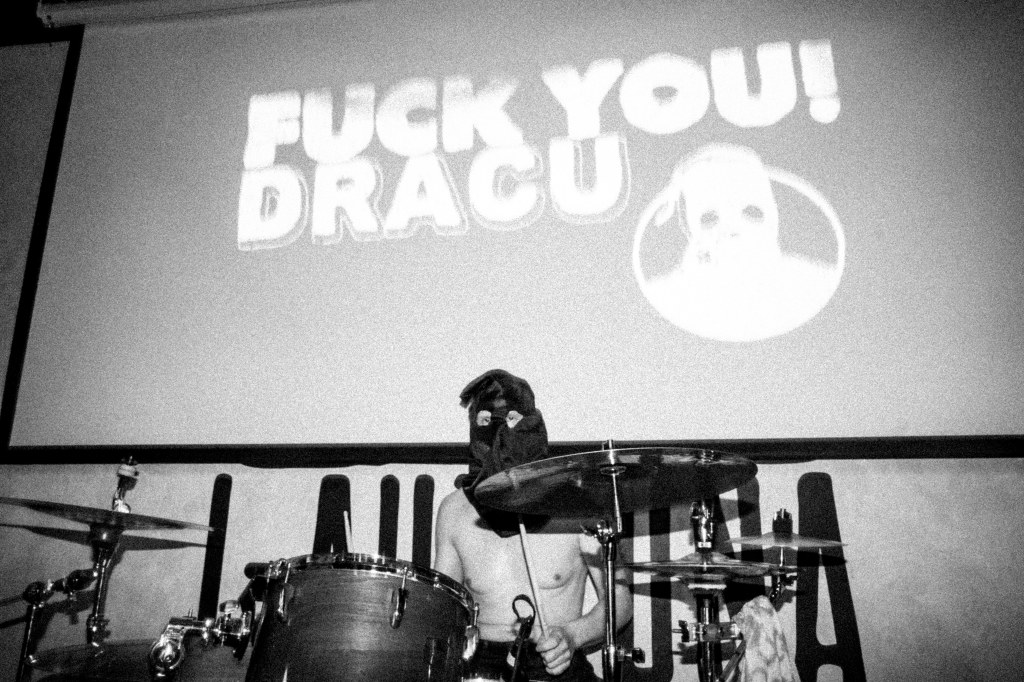
Alex Suciu was born in Oradea and raised in Târgu Mureș, so you can compete with him in Transylvanian accents if you want. He has 18 years of experience behind the drums and has played in a lot of projects, some more successful than others like D.E.N.I.S, Fuck You! Dracu or Larvae. He barely failed his bar exam. I know, you wouldn’t say he wanted to be a lawyer when you see him on stage giving his all behind the drums. He’s the kind of guy who has been to those important concerts your metalhead dad would tell you you can’t miss in a lifetime: Metallica, Megadeth, Rammstein, etc. But besides that, he really is a guy who tries and seems to challenge himself to do better and more. Sometimes he succeeds, other times he doesn’t, but at least he tries. I like discovering interesting people who really enjoy what they do and don’t seem to mess with me or give me sarcastic answers just to do it and not say they didn’t respond. Suciu doesn’t fall into that category. I really enjoyed talking to him for real and having an endless conversation about music from the 80s, how to balance it with a job, what priorities to have, how to realize what’s for you and what isn’t, and how to cope with stress and situations that may arise.
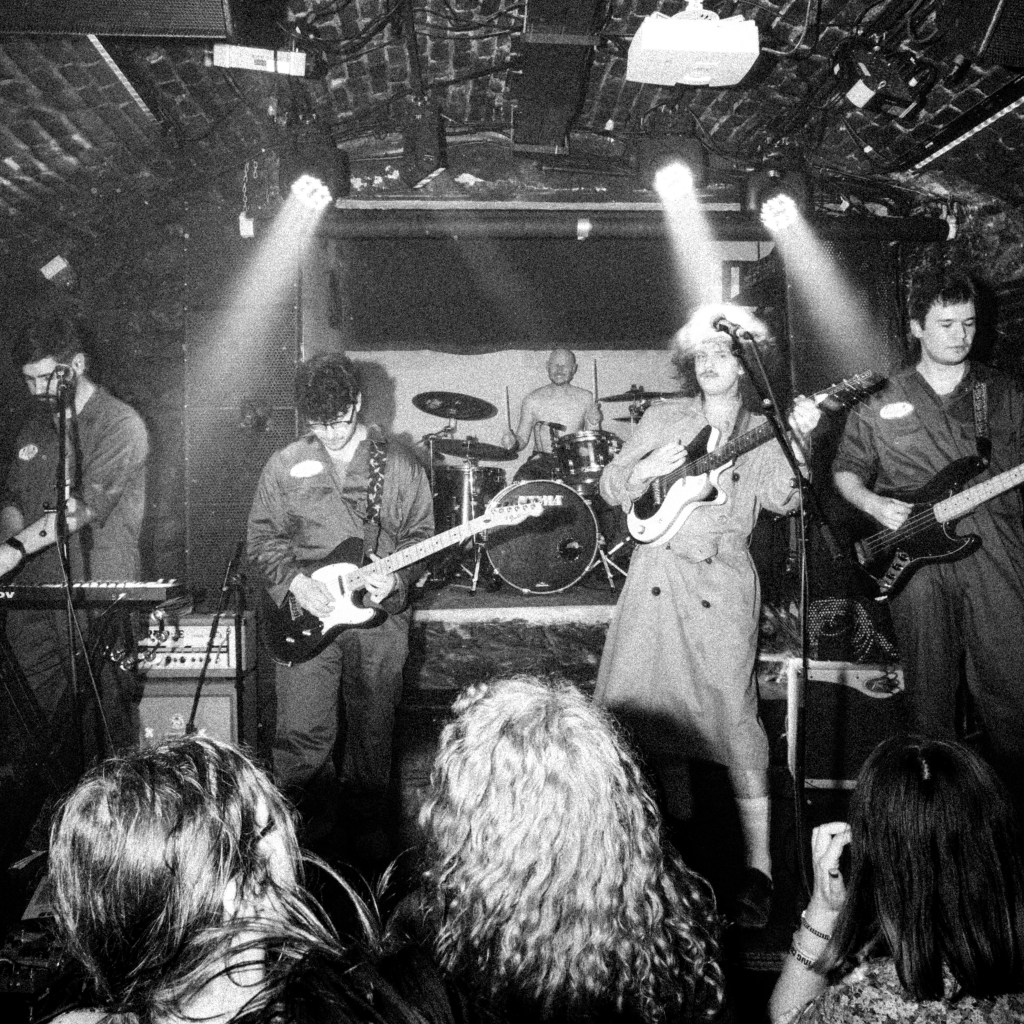
Currently, Alex Suciu is the drummer for the band D.E.N.I.S, whose interview you can find here. At D.E.N.I.S concerts, you can see him at the drums giving it his all and how he enjoys it like a child when the crowd, mostly high school and college students, shouts “Suciuuuu.”

That being said, let’s see how Alex responds to my many questions full of curiosity.
Ionela Pleșan (I.P): Tell me something about you that not many people know?
Alex Suciu (A.S): Something about me that not many people know is that I have always liked geography and tried to learn geography on foot (n.r. to travel) and not just by the book. And this stimulated me to travel a lot, randomly, by train or by car through Romania. Back when I was in high school, as far as I remember, the local train had a 50% discount, and the express train a 25% discount for the youngsters. I was lucky also because I lived in Târgu Mureș, which was quite close to a big railway station, Războieni, from which I could embark on different journeys. This kind of geography ”by travel” helped me to socialize much more easily with new people. The coolest place I’ve been so far was at Sarmizegetusa Regia lying on the grass.
Alex really likes the Romanian rock band E-an-na and because of his passion for history, he believes that the only Romanian bands that really succeed commercially in Romania are those who also incorporate this folk area and sociological elements from the Romanian culture. Here examples like Negură Bunget, Bucovina, Phoenix, Trooper, Dor de Duh, Subcarpati came up. Phoenix should have started, not with all these bands, but historically should have started with them, since I’m showing off with history.
I.P: What’s your ritual? What do you do before a concert?
A.S: My ritual is to practice every day or as often as possible. And, before a concert, I always rehearse a little bit at home, or wherever I am. I care a lot about warming up. Music is like sport, you have to warm up in order to have a good connection between body and brain.

I.P: How did you find yourself in the projects you’ve been involved in or are still involved in?
A.S: I liked everything I did. I never played in a project out of obligation or to create discomfort for myself. There are problems that I understood however, these are exclusively internal. You have to think that maybe it’s not just about you or not just about your opinion, you know? And sometimes I realize that maybe I’m wrong, but I always loved what I did, I really, really liked what I did and I still do.
I.P: Do you think you have a certain style, or do you go for a niche?
A.S: Yes, the niche I approach as a drummer is, on one hand, an aggressive punk style where you hit hard, where power matters, hammering, in a more comedic term. And I am also very, very attracted and magnetized by this old-school style. I really like old-school drums, bands, and old-school music. Of course, there are a billion modern, new, incredibly beautiful bands and artists, and I’m happy for them and I wish them success. But, I draw my inspiration from this old-school area. Led Zeppelin, Beatles, Pink Floyd, Kraftwerk, Bob Dylan, you name it.
I.P: And when you explore new areas, with new bands from recent years, what attracts you the most?
A.S: I explore fewer new artists.
I.P: And why do you think you explore less new artists?
A.S: Because I love certain old, legendary artists so much. For example, Kraftwerk, to say, or Led Zeppelin, from which I started listening to Rush, Pink Floyd, Toto, and so on. I love those areas of old school music so much that I always have something new to learn, and then I don’t have time to listen to new things, unfortunately. I’m not just talking about their music written on CDs, that is, recorded on CDs or streamed on Spotify. I’m talking a lot about musical study. For example, these old school bands have a large number of bootleg concerts.
I.P: What does that mean?
A.S: Bootleg concerts are gigs from those times that weren’t filmed but were recorded through soundboards (the mixing board). These are recorded just like any audio from a big concert we see on DVD or on Youtube. And there are so many such audios that I explore and search for and because of that I don’t have time, or I can’t find time even out of curiosity, to search for other new stuff. I am constantly connected to the old things from which I learn. And why do I say I learn? Because old artists had a unique process which was lost in time. Music was played from the soul and not just like nowadays robots.
What also guides me musically in this process is the percentage of improvisations. Old school rock artists improvised a lot. It’s very interesting. I search for bootleg concerts from 1972, Led Zeppelin has a certain style. They do certain things. Afterwards, I searched for a show from 1973, for example. They do other things or even search bootlegs from the same tour from several concerts recorded, and they differ, the solos, the breaks etc. That is, this creative part, this improvisation part in rock music, this stimulates me intellectually to search in that area. Which in modern music happens too little.
I.P: Does D.E.N.I.S have these moments of improvisation?
A.S: Fortunately, Denis has these moments of creativity. Daniel is a talented visionary artist who always thought that every concert of ours should have something different from the gig before. There are no two Denis concerts with the same setlists or to have the exact same things happen. He always has something new, always finds a trick, an interesting idea. My colleagues Marko, Marat and Gabriel GxB, also contribute with their unique vibe. And going back, I really like the element of surprise and improvisation, which I would like to see more in modern rock music.
I.P: So, how are you up-to-date with the music that is being released now and with what trends the audience that comes to your concerts has, at your concerts? If you rely more on 70s-80s-90s music and try to connect with this audience that might listen to something completely different?
A.S: The idea is that I never set out to conquer a certain segment of the public or an audience of a certain type or someone else besides the girls that I fall in love with.
I.P: If you wanted to pick up girls, why don’t you play the guitar?
A.S: But I’ve never, never picked up musically.
I.P: Well, yes, because you’re a drummer.
A.S: Exactly!
I.P: How do you manage talking to people who follow you?
A.S: I felt recently, maybe the news helped me (news that Alex makes on his Instagram page about what’s happening in the underground), but lately, I started engaging with more and more people, most of them being the youth punk generation. But I’m just a regular guy who happens to be older.
Hopefully I give them a good vibe. But I realize that their projection of me comes with certain expectations. But I just want to be myself and try to be friendly with everyone.
I have always been aware that I need to have a certain presentation. Why do I think this? Because this is what I’ve learned from my family. The only model that I want to be is the model brother for my younger sisters Dora and Irina. In the end, I have a job, I am an expert on international sanctions at a financial institution.
I.P: What does this entail?
A.S: It means that I investigate. Well, this story is also written on LinkedIn, so it’s not a secret. I investigate certain things in the banking compliance area. Some sort of detective.
In the end, the real Alex Suciu, whom almost no one knows, in my day to day life, for me, this musical segment is just a piece of what I actually do, and who I really am. And that is, in fact, in terms of weekends, the fun, joy, pleasure of life, you know? But in reality, I am trying to build a professional career because I have to exist, I have to survive. I also have a training certificate in public speaking, among others. I can teach any D.E.N.I.S fan the art of public speaking. I am really happy when I see youngsters participating in public debates or these kinds of competitions because they force you to learn that there are always conflicting arguments for the same issue. Every problem has several angles from which it can be viewed. We should not think black and white. We should see a problem from as many angles as possible.
I.P: Do the people at work know what you do on weekends? Have they been to your concerts? And what feedback did they give you?
A.S: Most of them, yes and I am grateful for that. However, I fully acknowledge that not everyone understands this. And I don’t expect everyone to understand passions or hobbies. Years of work in the corporate environment has brought me very much down to earth and I realized how the world works in general. A necessary pragmatism.
But the corporate environment had little impact on the way I understand music. From my perspective, music should not be corporate. I got into a corporation about 11-12 years after I started playing drums and performing live shows. That is, I have been playing drums since 2006. And I got into a corporation in 2017, yes. After 11 years of doing music, I ended up in a corporation. I didn’t get into a corporation first and then started drumming to convey corporate in drums. But, I imposed the corporation in music in terms of discipline. Back to colleagues. There are colleagues who support me and some of them watch what I do. Some of them have been to my concerts. Some ask me questions regarding my musical passion during our lunch break. I had lot of positive experiences with them. For example, a team leader from my workplace gave me a pair of drumsticks as a gift because he likes what I do. This motivated me. There are also colleagues who are not interested in what I do musically because, after all, my job is to support my team, not to play music.
I.P: But aren’t they the kind that ask you why you do this or why you continue or what this passion is about?
A.S: I have met mature people where I work. They are mature people, serious people, people with credits, people with children, with families who have bigger responsibilities than I have. Indeed, a lot of people there have asked me why I don’t do music full-time. I told them that music doesn’t provide me any kind of financial stability such as a monthly wage and that I would do only music with all my heart, obviously, but, and especially with the post-pandemic experience, even more, I wouldn’t have the courage. If I had a thought before the pandemic to sacrifice everything and see where a full musical career would take me, after the pandemic, I have absolutely no courage to ever try that. I want a stable job. Corporate stability.
I.P: So, is this a dream? To do only music and not have a job on the side? Or are you okay with what you have now, and it’s okay?
A.S: I don’t think I will ever… I mean, I am completely convinced that I will never make money from music in order to survive as I want. And if I make money from something other than a corporate career, it will be a personal business, so entrepreneurship. Maybe someday I will be the CEO of a corporation. The Suciu Corporation. We will deliver positive vibes and cheap perfumes.
I.P: What do your parents say about your musical passion?
A.S: They have no idea that people shout my name at concerts. I never told them. They live far away in Târgu Mureș and they haven’t been to a D.E.N.I.S show yet. My dad wanted me to become a lawyer. I also had this dream during my college years. However, I didn’t become a lawyer because I failed the bar exam by a hair. And by chance, I ended up working in corporations but I consider myself fortunate because I had the chance to build the career I talked about. I am grateful to my parents for everything they’ve taught me. Because look, now I enjoy when the world is shouting.
I am not a drummer, not a corporate person; I am human.
I.P: Regarding social media, what is the story with your Instagram reel “Suciule, open the window a bit”?
A.S: So the story is 100% real, only that the thing is the other way around. They accommodated us at that Hotel before a Denis concert, and Gabriel, our keyboard player, asked me if I needed the bathroom, and I told him no, you can go, but open the window, and the man opened the window, and what did he see? A huge white wall instead of a real window. And he shouts: “Suciule, come here a bit.” And I went straight away and saw that thing, I looked like this, and I said… Yes! Content! Content!
I.P: How is the live experience for you, and what experience do you have with this?
A.S: You have to push through. That’s what I did all my life. I played everywhere, with everyone. A kid asked me this week. He wrote to me, “Suciule, give me some advice,” a kid from the 10th grade, to give him advice about a concert in Underworld. And I said, as a drummer, you will never hear anything on that monitor on stage. You need to know the song, repeat it as much as possible, and know it by heart. Go, enjoy yourself because every concert is a unique experience. I played in places where they didn’t have a drum seat, and there were two beer crates for me to sit on. Concert after concert, exposure, experience that is important, this process will make you stronger and stronger.
I.P: Do you have prospects? And If you don’t, why not?
A.S: No because nobody needs a drummer nowadays. I started thinking more and more about giving up the drums but something forced me to keep playing.
I.P:Does someone need to come?
A.S: Well, that’s also with interviews and all these things. It’s an opportunity for visibility, that maybe some rich and famous musicians notice me, they might be interested, and say, “Hey, our drummer is leaving, come and join the dark side!” .
I.P: Would that fulfill you to play at Cargo?
A.S: Yes, it will be great to play next to Adi Baciu. Ziua Vrajitoarelor by Cargo was the first song I played live. The second one was Somn Bizar by Iris.
Alex is one of the people from the underground industry in Romania with whom I really enjoy talking, and I know I will leave with something extra from that conversation. He is the kind of person who tries to give something back from any conversation you have with him and he is always present. I wholeheartedly recommend following him and attending his concerts with the band Denis and any other projects he gets involved in. He’s the kind of person who’s there to give you advice and doesn’t have a rockstar attitude, as he himself says. He considers that he doesn’t have fans; he has only friends who listen to what he plays. If you want to support him even more, you can find him on Instagram, and if you want to listen to him, you can find him on Spotify with bands like DENIS, Fuck You Dracu, and many others.
Underground scene is an initiative started by me, Ionela Pleșan from Rock Monsters Romania. I aim to talk to people who seem to be less visible in the Romanian underground industry. My goal is to engage in meaningful conversations with a diverse array of people, from drummers and bassists to sound engineers and lighting technicians. Each of these unsung people has a unique story and invaluable experiences to share, stories that can inspire and educate us all.
The heart of Underground Scene lies in its commitment to uncovering and sharing these narratives. I believe that every person involved in the underground music scene, no matter their role, contributes significantly to the richness and vibrancy of the industry. By giving them a platform, I hope to foster a greater appreciation for their work and inspire others to delve deeper into the world of underground music.
So if you have a recommendation for a great person who fits into the categories mentioned above, send us a message on Instagram or email.
Let’s keep the spirit of underground music alive and thriving. And speaking of keeping the spirit alive, how about we all meet up at the next D.E.N.I.S concert?
 Rock Monsters Romania
Leave a comment