
Cuibul, one of Moldova’s most iconic rock bands, is celebrating over 30 years of musical evolution. Blending funk, rock, grunge, and folk, their sound has always been diverse and ever-changing. Their latest album, Vamos, marks a new chapter for the band, combining old favorites with fresh material. Recorded between 2022 and 2024, Vamos features songs in Romanian, English, and German, capturing the band’s essence while aiming to expand their presence in Romania and Europe.
The album includes previously unreleased tracks, along with collaborations such as with Lidia Scarlat, and introduces a more guitar-driven sound with a streamlined lineup. It’s not just a compilation but a reimagining of Cuibul’s identity across time.
As they prepare to launch Vamos in 2025, Cuibul is ready to reconnect with their audience and reach new fans. Their tour will bring their distinctive energy and passion to audiences across Romania and Europe, solidifying their place in the rock scene. With Vamos, Cuibul continues to show that their love for music and their drive to evolve remain as strong as ever.
We talked to them to learn more about them and their future plans in an exclusive interview!
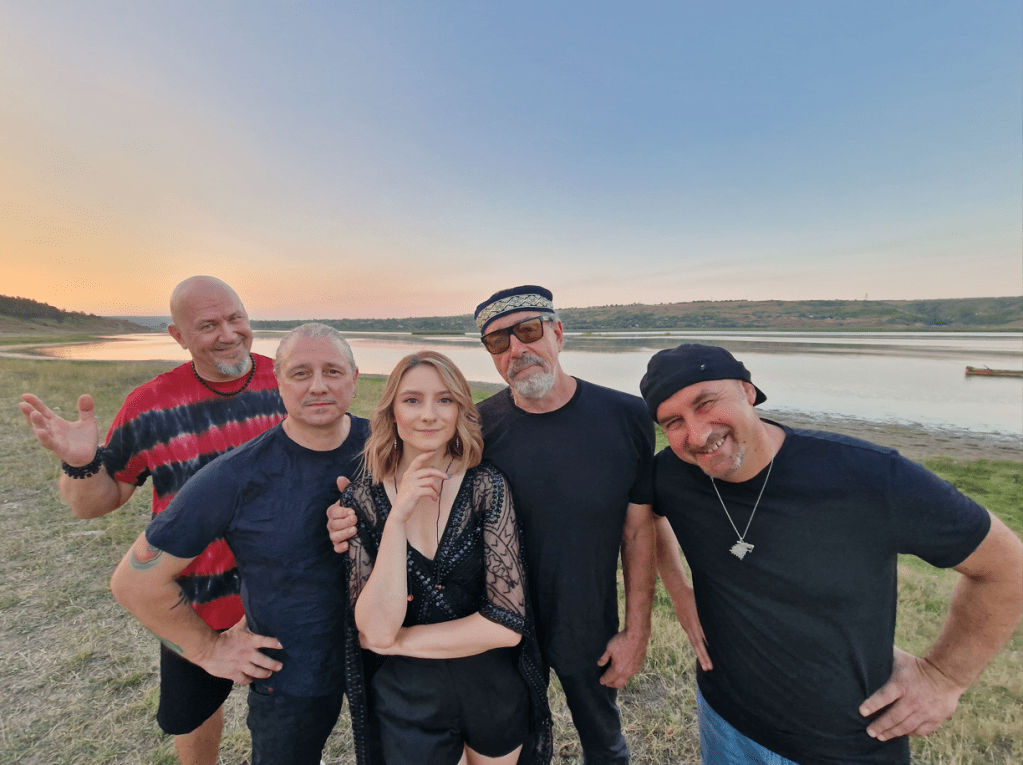
How would you introduce yourself to someone who is discovering you for the first time?
Eccentric groove music nerds blending funk, rock, grunge, and folk, with an occasional touch of the ethereal.
You’ve been performing for more than 30 years. How do you view your journey from then until now? What has changed the most in the industry?
Performing for over 30 years feels both like a lifetime and a blink of an eye. When we started, everything was raw, no roadmap, no rules, just a hunger to play. The early ’90s were a time of chaos and reinvention, especially in Moldova, where the fall of the Soviet Union meant an explosion of creative freedom. Rock ‘n’ roll felt like rebellion, like an open door to a world we were just beginning to explore.
Our journey as a band has been anything but linear. Our musical ambitions and the need to create new material often moved faster than the market could absorb. We were swinging hard between heavy rock and fusion-funk, which made it harder to build a stable audience. Adding to that, our geographic distance from major industry hubs limited our ability to tour consistently. Moldova is a small country, and after the collapse of the USSR, it became more isolated. Our closest regular stage was in nearby Odessa, in Ukraine. In the ’90s and 2000s, we didn’t yet have a Romanian-language repertoire, and to build proper success, bands had to relocate to Moscow, St. Petersburg or Bucharest.
Yet, despite the long breaks and detours, we never stopped loving music. Somehow, against the odds, the journey continues.
The industry has changed drastically: albums used to be physical treasures, now music is instant, digital, and algorithm-driven. The challenge today isn’t just making music, but making it noticed in a world of endless content. At the same time, this digital shift allows us to connect with listeners in ways we never imagined when we started.
What hasn’t changed? The thrill of playing live. That remains as electric as ever.
How has your music evolved during this period?
Looking at our discography, it feels like every album represents a different band, ha! Our musical tastes have shifted over time, and perhaps that’s our curse, constantly reworking our songs in different styles. We can’t help but reshape and reinvent, even if that most likely seems chaotic from the audience’s perspective.
Over the years, many incredible musicians have been part of Cuibul, and with each new member came new influences, new interactions, and new creative chemistry. Ultimately, though, we celebrate music in all its forms. We’ve always followed where the music itself wanted to take us.
Maybe Vamos will mark a turning point. With this album, we hope to establish a more consistent presence by touring more across Romania and Europe. There’s a huge untapped potential within the diaspora, as many of the people who attended our concerts in the ’90s and 2000s no longer live in Moldova.
“Vamos!” is more like a compilation of your favorite songs. How did you choose them, and who came up with the idea for the album?
Before the pandemic, Cuibul had a large funk-oriented lineup, often with 7-8 people on stage, including a brass section. 2019 was an incredibly active year, we toured extensively across Romania, Moldova and Ukraine. But like many bands, the pandemic forced us to pause, and ultimately, that chapter of Cuibul came to an end.
So I (Igor Dînga) reached out to musicians I had played with back in the ’90s: Ghenadie Barbu (drums) and Sergey Vatavu (guitar), both rockers to the core. We decided to strip things down to a four-piece setup and focus on a more guitar-driven sound.
To build our new setlist quickly, we went back through our discography, starting with our very first album, Break the Branches, Break the Sticks from 1994, which, 30 years later, is now being released on vinyl in Romania through A&A Records. While digging through our archives, we also found old rehearsal recordings from the ’90s, and from those, three songs finally came to life on Vamos! after years of waiting.
One of the criteria for selecting songs was how well they could be adapted into Romanian. Some tracks just naturally transformed, taking on a new identity in the process. In the end, Vamos! is not just a compilation, it’s a reimagining of Cuibul’s essence through time.
The album includes songs in Romanian, English, and German. What influences your decision to choose one language over another for a particular song, and who writes the lyrics in each language?
I (Igor Dînga) am a Russian-speaking songwriter, so my lyrics naturally start in Russian. However, since we wanted to continue Cuibul’s presence in Romania, it became important to make our music more accessible – especially considering that our band name itself is in Romanian.
We’ve already had experience adapting songs into Romanian with Lidia Scarlat, and we continue to collaborate closely with her. However, not every song translates smoothly into Romanian – some melodies simply call for a different linguistic rhythm. That’s why we also sing in English and German, languages we’re comfortable with.
On Vamos!, most of the songs are performed by me, and the Romanian lyrics were written by poet Vsevolod Ciornei, who has also collaborated extensively with Zdob și Zdub. Each language brings its own character to a song, shaping its energy and emotion, so our choices are always driven by what feels most natural for the music.
Regarding the previous question, there’s another detail that confuses people: Why is the title in Spanish?
The title might seem unexpected, but it came about naturally. While we were jamming and working on riffs during rehearsals, I instinctively started shouting “Vamos, amigos!” in rhythm with the music. It just fit the energy of our newest track, which has the same name.
Beyond music, I’m a big fan of squash, a fast-paced and highly dynamic sport. Some of the most passionate players in the world’s top rankings are Spanish and Latin American athletes like Borja Golán, Miguel Rodríguez, and Diego Elías. After a winning shot, they often shout “Vamos!”, a word that means “Let’s go!” or “Forward!” in Spanish. It’s a moment of pure adrenaline, a burst of motivation.
That same energy inspired both the song and the album title. Vamos! captures movement, excitement, and the drive to keep going.
The album contains exactly 13 songs. Is there any particular significance behind this choice?
We recorded 15 songs, but ended up keeping only 13, with no special reason behind it. It is just how things worked out. However, the vinyl edition only includes 11 tracks because of time constraints, as vinyl can only hold up to 44 minutes of music, so we had to make some cuts.
You’re starting the year on stage. What other plans do you have for this year?
With the new album, we’re hoping to establish Cuibul more firmly and finally build a dedicated audience in Romania. In fact, later this year, possibly by autumn, we might relocate to Bucharest. The city offers so many opportunities for live performances, and we want to be where the music is happening.
We also have plans to travel to Hamburg and record new music with a German producer. So, 2025 is shaping up to be a year of movement and hopefully, a lot more time on stage.
Do you have any advice for young bands who aspire to have a long-lasting career like yours?
For young bands, the main driving force is often a shared passion for a specific genre. But the truth is, longevity in music isn’t just about technical skill, it’s about the bond between band members. A band can only survive if its members are truly into creating and, just as important, if they genuinely like and support each other.
Musical mastery comes with years of rehearsing, but the real challenge is staying on the same wavelength as a group. The best advice we can give is: stick together. Support each other through the difficult early years, because that’s when most bands fall apart. The longer you hold on, the greater your chances of success.
What message would you like to share with those who will read this interview?
There’s so much great music and so many incredible artists in the world, but life works in a way that brings us together almost randomly.
If you’ve come across Cuibul through this interview, maybe it’s not so random after all.
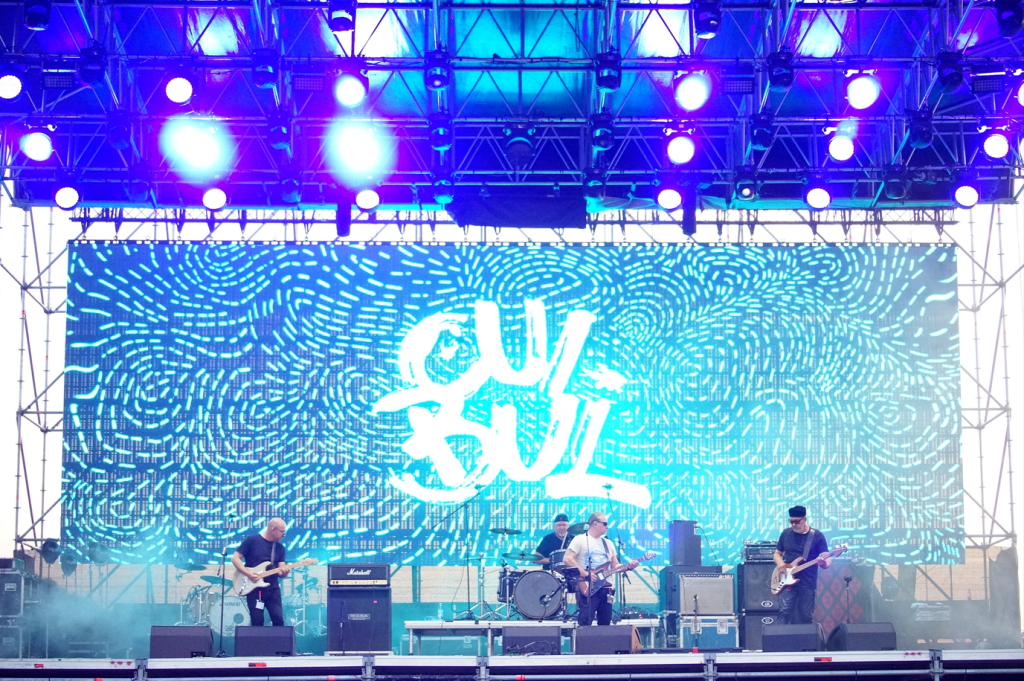
We are a rock band with a Bessarabian soul, carrying a mix of cultures and sounds, and with Vamos!, we’re kicking off a small tour in Romania this February, then heading to other European capitals. We’re looking forward to every new encounter along the way. Vamos!
Interview by Radu Mihai
Intro by Ionela Pleșan
 Rock Monsters Romania
Leave a comment