
Roca Camp 2025 concludes at the end of this year as a comprehensive mentorship and artistic development program dedicated to emerging bands in the indie, alternative, and rock scenes. Initiated through a national open call launched in August, the project was built around the real needs of Romania’s alternative music scene and proposed a structured, step-by-step journey of training, production, and visibility.
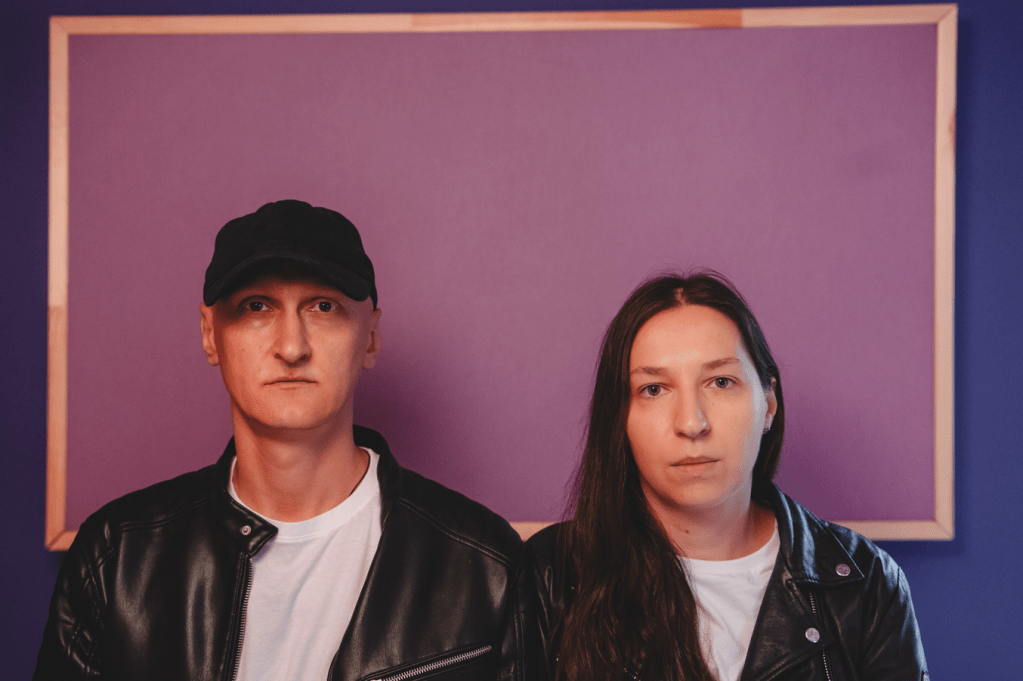
Mădălina was one of the artists selected for Roca Camp 2025. Her solo project, developed in Iași, is rooted in emotion, sensitivity, and a rare artistic sincerity. With origins in alternative rock, she is now shaping her own voice by exploring themes such as identity, fragility, and transformation.
Her music blends delicate vocal lines with acoustic textures and minimalist harmonies, resulting in a sound that moves through chill, lounge, and post-rock territories. The atmosphere she creates is intimate, at times melancholic and at others cathartic. In live performances, Mădălina collaborates with bassist Iulian Miron, together shaping a coherent and expressive sonic universe.
Your solo project is very intimate and vulnerable. What made you choose this moment to step forward with your own musical universe?
I found the courage to give my solo compositions a chance at the moment when the band I was part of stopped functioning. The Roca Camp announcement appeared immediately after the discussion with my former bandmates, and it felt like a very valuable opportunity for a project that was just at the beginning of its journey.
How does it feel to move from being part of an alternative rock band to being the sole voice and creative center of the project?
It feels different. I have always wanted to sing genres other than rock, but the compositions I brought into the rehearsal room rarely took a shape outside the rock area. As for live performances, Roca Camp was also the first opportunity for me to truly understand the difference between singing 100 percent live alongside instrumentalists, as I was used to, and performing with just voice and guitar over backing tracks, alongside Iulian on bass.
Why did you feel that Roca Camp was the right place for your solo project?
I have attended Rocanotherworld since its very first edition, and I really appreciate how the festival has grown and how it has educated its audience over time. I believe the level of quality the festival has reached gave me confidence that Roca Camp would live up to the same standard. It felt like an extraordinary opportunity. I sensed that if my project were selected, it would be a sign that it was worth investing time and energy into developing it further. Having so many industry mentors involved also meant that my musical decisions would be guided with more care than before.
What feedback you received there stayed with you and made you look at your music differently?
I took something away from every mentor. I particularly enjoyed working with Eduard Draude and Eveline Buta, who helped me understand and pay closer attention to how I express emotions vocally in my songs, from tone to attitude. More than ten years of singing rock, from punk to metal, had left a fairly aggressive imprint on my delivery and emotional expression. The ideas I brought to Roca Camp were different and required a different way of communicating emotion. I am not sure I was fully aware until then of how I conveyed lyrics and emotion, but their guidance truly changed my mindset.
I also had the opportunity to work on the production of the song “Liniștea” with Alexei Țurcan, who deeply impressed me with the creativity and speed with which he improved the sound. Not through the complexity I thought a song needed, but through simplicity and highlighting its core essence. He also helped me become more aware of the role of each instrument in relation to the voice.
Although he was not officially listed among the Roca Camp mentors, I also had the chance to meet Alex Purje at Cuib in Bucharest. Alex took part in the editing and production session alongside Alexei Țurcan and guided me in how to convey the story within the song.
I am deeply grateful that I had the opportunity to meet all of them, and without Roca Camp, I would not have had this chance.
Did you discover themes or nuances during the camp that you want to explore in future songs?
The mentors mentioned above helped me see more clearly the potential of a new direction in my musical future. Through Roca Camp, I realized that I can sing outside the rock sphere, while also knowing that I can always return to it if that feels right.
What was it like to share such a personal project within a community of artists with different energies?
It was emotional, but I always felt I was in a safe space, surrounded by people with whom I shared similar experiences and challenges. The mentors had answers and solutions for every question. I will never forget the atmosphere created at Cuib in Bucharest. Over the two days we spent there with the camp, the place vibrated with creativity. Something was happening in every room, from rehearsals and vocal coaching to recording sessions and photo shoots. I was deeply impressed.
Roca Camp is a mentorship, training, and artistic visibility program dedicated to emerging bands from the alternative, indie, and rock scenes, organized by the Creative Industries Association under the Rocanotherworld umbrella.
Cultural project co-financed by the National Cultural Fund Administration (AFCN).
This project does not necessarily reflect the position of the National Cultural Fund Administration. AFCN is not responsible for the content of the project or the way in which the project’s results may be used. These are entirely the responsibility of the funding beneficiary.
Interview by Ionela Barbu
 Rock Monsters Romania
Leave a comment