
It is March, the month when we try to dedicate ourselves entirely to the women and girls in our lives. On this occasion, we decided to speak with women who are active in the Romanian music industry and beyond.
The first interview in this year’s series features Adina Popescu, who has around 15 years of experience in the music industry, where she has worked in a variety of roles.
She is one of the co-founders of Sync About It – Music Conference & Songwriting Camp, the first conference in Central and Eastern Europe focused exclusively on music sync, an event designed to connect European music sectors and professionals who can benefit from sync opportunities.
She is also in charge of Communication and Social Media at Control Club, one of Romania’s most important live music venues. You’ll most often find Adina at Control, first and foremost capturing the live moments and the energy of the crowd. In addition, she’s working with +SHE+, write recommendations of cultural events for Scena9, where it seems nothing escapes her radar, neither from the underground scene or the mainstream and hosts Sqweez!, a vibrant queer techno party series.
Her journey began with organizing DIY concerts. Over the years, she has led music-driven projects for major festivals such as Neversea, SAGA, and Massif, and for five years she handled concert bookings for the Transilvania International Film Festival (TIFF), Romania’s best-known film festival.
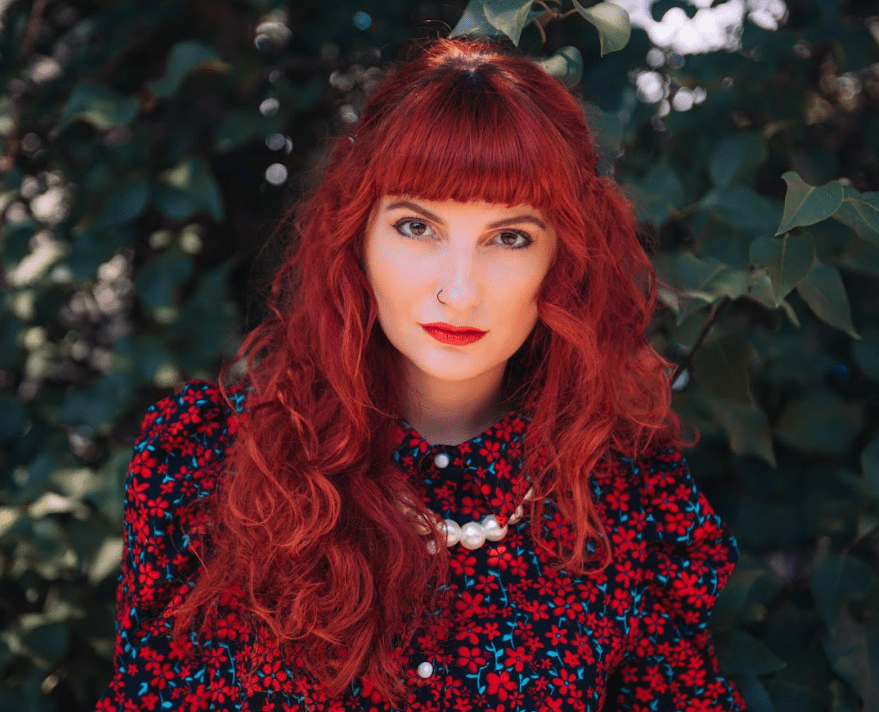
We wanted to learn more about her, the challenges she faced in her career and what drives her forward her every day in a special interview.
What are the things people should know about you before reading this interview?
Probably why I was chosen for this interview. 🙂 It might be because I’ve been “playing” in the industry for around 15 years, trying a bit of everything and still not fully deciding on anything other than the fact that it has to stay music-related.
I work across the cultural and music sectors, at the intersection of communication, project management, and the city’s nightlife. Co-founder of Sync About It – Music Conference & Songwriting Camp, the first conference in CEE dedicated exclusively to music sync. These days, I’m part of the comms team of Control Club, with a focus on live music, and part of the Sqweez! team, an underground collective that does queer techno parties and film nights. I also collaborate with the band +SHE+, Scena9, and EUNIC Romania, building on several years of experience in DIY promoter work, artist booking for TIFF, and advertising with a focus on culture and music festivals.
Which woman inspired you from the beginning? What have you learned from her as a model?
If I have to pick someone from the music world, right now Amanda Palmer comes to my mind. This was around the time I was starting to shift from just loving music to actually stepping into the industry side. I was drawn to her punk-cabaret style, sometimes a bit masculine for the times, her unapologetic way of being on stage , and the fact that she was loud about feminist stuff.
Later on, her TED Talk and The Art of Asking book felt personal, especially the whole idea of learning to ask for help as I was taught I have to do everything alone. Then she went independent and crowdfunded her album – showed me how much real connection with fans actually matters. Seeing a woman doing things on her own terms back then gave me a bit of courage to imagine myself in this world too.
For everything else, there’s my mom.
Why have you chosen the music industry? Where does your passion come from?
I sometimes feel like it chose me. Like it just happened to me, even though, looking back, I was probably moving toward it all along. Growing up, music created those moments when everything felt okay in my family. After that, it became my safe space. It was also closely tied to fashion for me, like I had to dress the talk.
But at 14 I was already traveling the country for live concerts, doing volunteer work at Stufstock, by 18 I was booking my first band – so in university (Cluj-Napoca), when opportunity arose, it only made sense for me to help B.H.C.B (promoters), start the New Disorder party series, do event photography and poster design. Then everything else followed, with a not-that-short break to actually earn money :))
Was there a moment when another woman warned you about the challenges you might face in the music industry because you’re a woman? What was your reaction?
I was trained in a men’s world, living and working with guys, so at the time, I often perceived other women as “the problem,” mostly because we were all trying to adapt to the same restrictive system. Pretty late in life I started meeting women that offered me safety, trust and (honest) advice.
But in the past couple of years, through music conferences, topics like ageism, motherhood, and even menopause started entering the conversation. Yes, when I thought I was safe, another reality wave hit me. But at least I knew I was not alone in this.
Have you faced any challenges that could only happen to women in this industry? Can you give us some examples and explain how you overcame them?
I would not say ONLY women face this, but as a booker I had artists harassing me, considering that my job meant I had to satisfy ALL their needs and “pleasures.” At one point, one of them chased me around the city and then in a club, until I hid in a restroom, waiting for some friends to secure the area and take me home.
Sadly, I did not act on that. It was around 10 years ago, and I thought speaking up on it would impact my career, along with thinking, “this must happen to us often enough, I am not the first one, so why should I be the first to say it out loud?” Not gonna do that again.
Have you ever felt pressured to present yourself in a certain way because of your gender?
Maybe at an unconscious level, but not having a father figure from my teenage years onward, combined with my growing interest in punk, rock, and later drum’n’bass, shaped the way I dressed into something more traditionally “masculine.” The way I presented myself often shifted with the music I was drawn to. I liked giving myself a kind of dress code, and I still do.
But I definitely had to learn more just to prove myself in front of men, even details that were not on my “job description”.
What changes would you like to see in the industry to make it more inclusive and welcoming for women?
As change often comes from the “inside”, I am glad to see women more united than ever. But I would probably like to see a platform for sharing experiences, bad or good, so we can learn from each other, along with real consequences when boundaries are crossed. Like in my case, to share details on artists/promoters/venue misbehaviour.
And usually when more women are in decision-making roles, it helps give diversity and inclusivity in ideas and approaches.
How optimistic are you about the future of the music industry in terms of gender equality?
The music industry is slowly becoming more inclusive for women through targeted initiatives, mentorship, and increased visibility. Festivals are starting to be called out for gender inequality in lineups. There are platforms that praise women in the music industry (GENIE, a database of women-led or gender equality-focused projects in the EU, or Keychange). And there’s Women in the Music (Romania).
So picture me optimistic, but don’t use that lemon with tequila just yet.
Can you share a memorable experience or achievement in your career that you’re particularly proud of?
Maybe it was the moment I started to shake off some of the imposter syndrome. Getting accepted into HEMI (The Hub for the Exchange of Music Innovation), where people I once looked up to became mentors and, later, collaborators, played a big part in that. And then there was receiving one of the largest LiveMX grants for our conference, Sync About It, which made everything feel a bit more real.
Are there any projects or collaborations you’re currently working on that you’re excited about and would like to share with our audience?
We have some very nice plans with Sync About It for this year, in Bucharest and hopefully they will take shape in other cities as well – I love this project and building bridges between image and sound.
And +SHE+’s double EP will be fully out any minute now – one of the local voices & artists I really believe in, on top of Corina being one of the strongest women I know and respect.
Looking back on your career journey so far, what are some valuable lessons or insights you’ve gained that you wish you knew when you were starting out?
You can’t really do it alone. Or maybe you can, depending on what your plans are. But for the bigger things I wanted to build, I definitely needed help. Mentorship played a big role in pushing that forward too. In front of decision-makers or people who control resources, two voices carry more weight than one.
And sometimes it’s not even about strategy. It’s about those moments when your brain suddenly goes offline, or your body, or you find yourself going in circles with the same idea. Having someone there helps you move through that.
The hard part is finding that person in the first place.
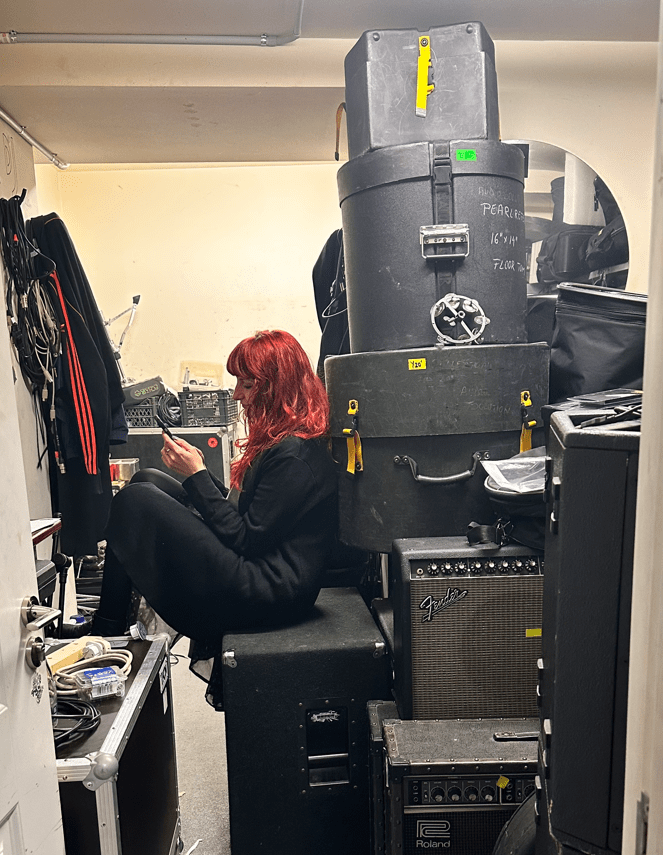
What advice would you give to young women aspiring to pursue a career in music? But to the ones that are reading this interview?
There are more resources available now than ever before, so take advantage of that – research should become routine. Read about how other artists and professionals got where they are, look for organizations that support others in the industry, join mentorship programs, apply for things even if you’re not sure you’re “ready” yet. But have patience.
I’d also say it’s important to find your own voice, your niche, the thing that genuinely interests/represents you. This kind of strategic positioning is something I learned from advertising, and it translates very well into music too. For artists especially, it helps define your persona. And if you have more interests – maybe you can combine them (like I do with Sync About It).
Last but not least, build your network and don’t romanticize the industry too much. Behind all the “dreamy” parts, there’s a lot of unsexy work, grindcore admin: spreadsheets, contracts, laws, logistics and all that jazz.
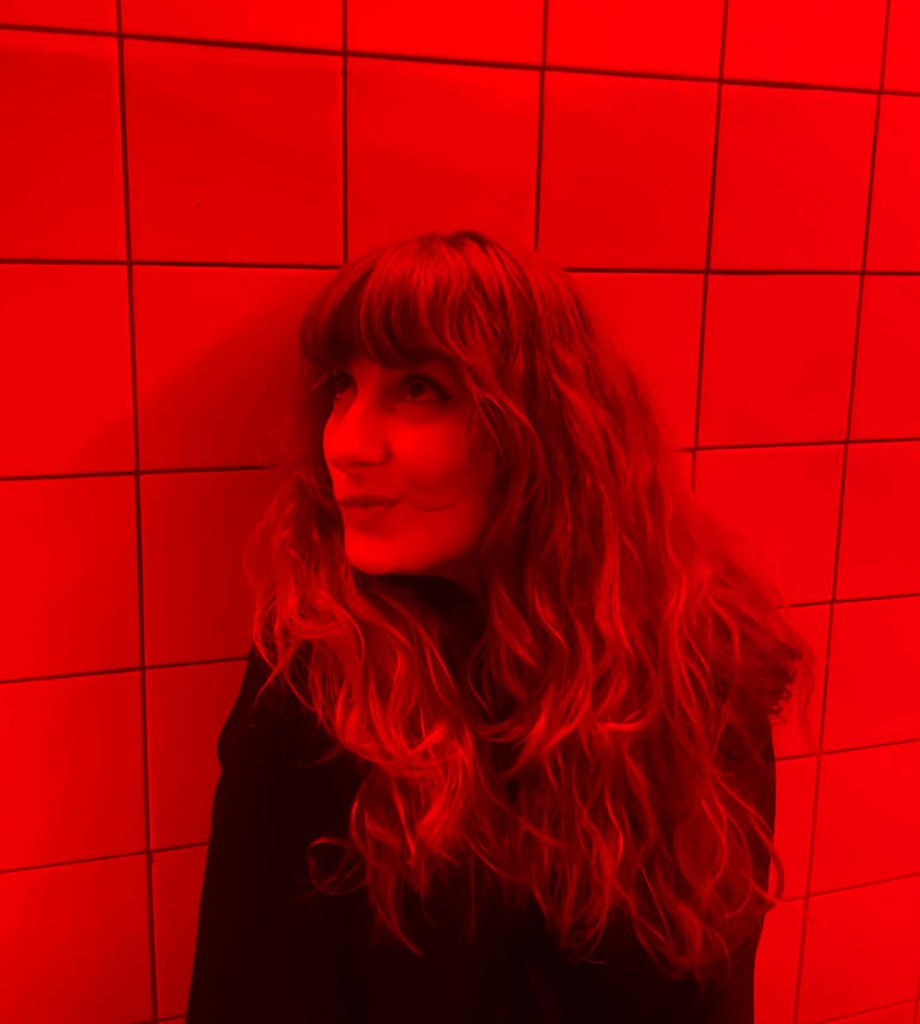
If you want to see what projects are next for Adina, you can follow her on Instagram, but don’t forget to follow all the projects described in the interview to see all the cool things she does.
Rock Monsters Romania believes in professionalism and in the chance for women to stand out in an industry that seems dominated by men. Due to this belief, we have decided that once every two weeks on our website, you can find a woman who is making waves in the music industry and offers daily inspiration and support to those around them.
Text by Radu Mihai
Interview by Ionela Pleșan and Radu Mihai
 Rock Monsters Romania
Leave a comment