
We started March with an amazing woman working in music PR, and we felt it was only natural to continue in the same direction.
Our second guest in this year’s series is Ionela Barbu, one of the promising new names in Romanian music PR and communication. Passionate, dedicated, and deeply involved in the local festivals, she has been steadily building her path and gaining recognition through her work.
If you had contact with festivals such as Classix Festival, Rocanotherworld, or Holzstock Festival, chances are you probably already know her. She has been quietly but consistently making a name for herself in the industry.
Ionela was also a mentee in the latest edition of the Women in Music Romania Mentorship Programme and is actively involved in organizing the She’s in Control series, further supporting and promoting women in music.
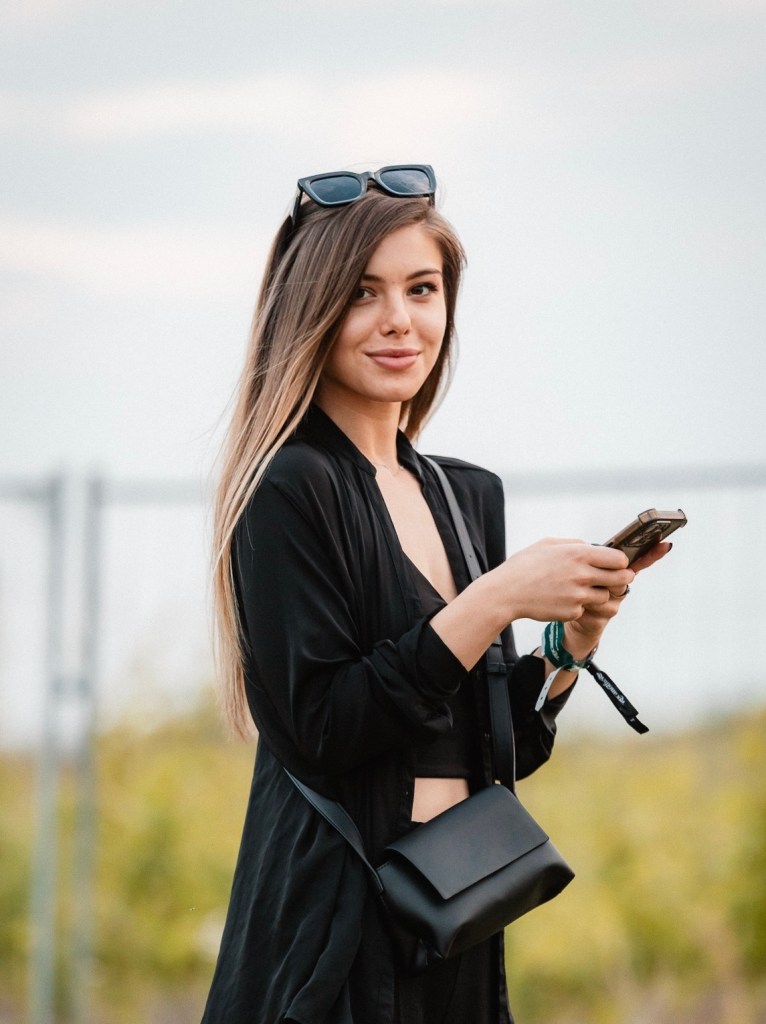
We wanted to learn more about her, the challenges she faced in her early career and what she wants to do in the future in a special interview.
What are the things people should know about you before reading this interview?
I think you should know that I speak very fast when I’m excited, and I get excited pretty easily. I probably enjoy organized chaos more than is healthy and, paradoxically, I’m very calm exactly when things start spiraling out of control.
I work in PR, mostly in the music industry (but not only), where plans change constantly and nothing ever looks exactly like it did in the initial deck. I feel most comfortable in that space between strategy and improvisation.
And yes, I probably reply to emails at questionable hours. Not because I have to, but because sometimes that’s just what life looks like. Not all the time, just sometimes.
Which woman inspired you from the beginning? What have you learned from her as a model?
In the beginning, I only had one very clear idea: I knew I wanted to work in music and events. I didn’t know how, I didn’t know where to start, I had a thousand questions and this constant feeling that I was too young and too far away from that world. But the idea was there firmly rooted.
Then, during a university seminar, Oltea Zambori came in and shared her journey and how she ended up working at Electric Castle. I resonated so deeply with her energy and her story that I told myself: okay, this is crazy enough to actually work. At the end, she said they needed volunteers for a conference. So I went.
That’s where I met Anca Spiridon, who, to me, is a mix between a professional mother and sister. She gave me the real confidence that I could actually do this.
Over time, I was lucky enough to meet other incredible women – Anca Floroiu, Ligia Kesisian, Patricia, Paula Furir – and the list could honestly go on. Each of them inspired me in her own way.
I don’t think my inspiration came from just one role model, but from seeing women who actually make things happen. And that gave me the courage to start, too.
Why have you chosen the music industry? Where does your passion come from?
I chose the music industry because, honestly, music has always been there. I’ve been fascinated by it since I was little. When I got my first guitar, around the age of 6, it actually had its own place at the family table. :))
The TV was on non-stop, tuned to MTV, UTV, and anything else that played music. I was the kind of kid who didn’t just listen to songs, but wanted to understand everything: who the artist was, what the stage looked like, what a concert meant, how a song ended up being played everywhere.
I think my passion comes from this combination: the emotion that music gives you and the fascination with what happens behind the scenes. At one point, I realized that I didn’t just want to consume music, I wanted to be part of the mechanism that drives it forward.
Was there a moment when another woman warned you about the challenges you might face in the music industry because you’re a woman? What was your reaction?
There wasn’t a dramatic moment when someone pulled me aside and said, “Be careful, it’s going to be hard for you because you’re a woman.” It was more of a subtle warning, based on the experiences other women shared, things said between the lines. It didn’t make me back down. On the contrary, it made me want to be as well prepared as possible and to build my place on merit, not on fear.
Have you faced any challenges that could only happen to women in this industry? Can you give us some examples and explain how you overcame them?
Yes, I have encountered challenges that frequently arise for women in the industry, especially in this environment, where power dynamics and ego are very present.
One of the things I faced in the beginning was not being taken seriously at first. In many meetings with managers or organizers, I felt that I had to prove twice as hard that I knew what I was doing. From the assumption that I was “someone’s assistant” to situations where my opinions were only validated after being repeated by another colleague, I quickly learned that I had to support my point of view clearly and with arguments.
Another challenge has to do with personal boundaries. The music industry involves a lot of work, and the professional and personal can easily become mixed up. As a woman, it’s important to know how to set boundaries without coming across as “difficult.”
How did I overcome these situations? First, through competence. Consistent results build authority. Secondly, by taking charge, I started to speak more emphatically, to assert my ideas and to stop diminishing myself in conversations.
There will always be challenges, but they have made me more strategic, more attentive to dynamics and clearer about what I want and how I want to be treated professionally.
Have you ever felt pressured to present yourself in a certain way because of your gender?
Not necessarily directly or openly, but you can feel it in the air. In the music industry, there is still the idea that if you are a woman, you have to be either very “nice” and easy to work with, or you risk being labeled as difficult if you are too assertive.
At first, I felt like I had to be “softer” than I actually was. To sugarcoat my messages, not to seem too direct, not to make people uncomfortable. Because often, what is perceived as determination in a man is seen as attitude in a woman.
Over time, I realized that I couldn’t build anything solid if I was playing a role. So I chose to be myself, empathetic and firm at the same time. And when people see that you know what you’re doing and deliver consistently, that pressure starts to matter less and less.
What changes would you like to see in the industry to make it more inclusive and welcoming for women?
I love that more women are taking on visible roles in the industry and that we’re starting to see more diversity, including in leadership positions. You can feel a change happening.
However, I would like it to become the norm, not the exception. More respect for professionalism, fewer labels, and more focus on competence. When you are evaluated for what you deliver, not for how you look or how “comfortable” you are for others, the industry automatically becomes more inclusive.
How optimistic are you about the future of the music industry in terms of gender equality?
I am quite optimistic. Changes are clearly visible, there is more visibility for women, more open conversations, and more solidarity among us.
At the same time, I believe that real change comes slowly. Mentalities do not change overnight, and the fact that the younger generations are much more aware and vocal gives me confidence that we are heading in the right direction.
Can you share a memorable experience or achievement in your career that you’re particularly proud of?
It’s hard for me to choose just one moment, because there have been so many, and since nights in the music industry are long, my memory is failing me. I’m joking… sort of.
Honestly, I don’t think I have a single “highlight.” I’m proud of myself every time I find myself in a complicated situation, a crisis, an impossible deadline, a tense context, and I manage to handle it calmly and strategically.
For me, achievements aren’t just about a big event or a viral campaign, but about those moments when the pressure is real and you still find the solution. That’s when I feel like I’m really doing my job.
Are there any projects or collaborations you’re currently working on that you’re excited about and would like to share with our audience?
I am excited about every festival I work for. Classix, which just happened, got my year off to a great start. Then there’s Rocanotherworld, Electric Castle, Balkanik Festival, each has its own energy and challenges, and I love that.
But, honestly, I’m perhaps even more excited about the ones I don’t know anything about yet. This industry is so unpredictable that you never know what’s around the corner. And it’s precisely this dynamic, the fact that something new is always coming up.
Looking back on your career journey so far, what are some valuable lessons or insights you’ve gained that you wish you knew when you were starting out?
I think the first thing I wish I had known is that I don’t have to constantly prove that I deserve to be at the table. At first, you feel like you have to say “yes” to everything, accept every opportunity, every compromise, just so you don’t miss out on something. Over time, I’ve learned that healthy boundaries don’t close doors, they position you correctly.
Then I understood how important reputation is. In the music industry, people talk to each other. How you manage a crisis, how you communicate under pressure, or how you treat your team matters enormously in the long run.
And perhaps most importantly: to trust my instincts more. Often I knew the answer, but I questioned it. Experience has taught me that intuition, combined with strategy, is one of the most powerful tools I have.
What advice would you give to young women aspiring to pursue a career in music? But to the ones that are reading this interview?
If you’re reading this and thinking about getting into the music industry, go for it. Don’t wait until you feel 100% ready. No one ever is. You learn as you go.
Don’t shrink yourself to make others feel more comfortable around you. There will be moments when you doubt yourself, when you feel like you don’t know enough or that you have to work twice as hard to be taken seriously. That’s okay. Those are the moments that help you grow.
But remember something very important: once you get here and everything starts happening – deadlines, long nights, festivals, beautiful chaos – learn to take a break before your body takes one. Burnout is not a badge of honor. The industry isn’t going anywhere, but your health might.
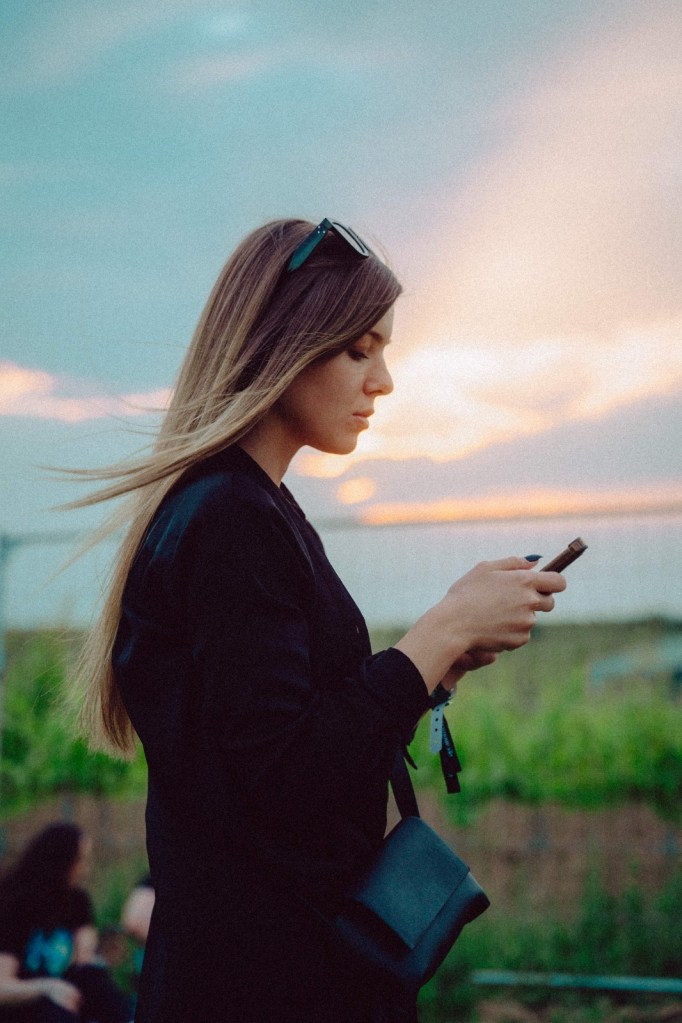
If you want to see what’s next for her or get a glimpse into the life of a PR professional in the music industry, don’t forget to follow her on Instagram to keep up with her upcoming projects.
Rock Monsters Romania believes in professionalism and in the chance for women to stand out in an industry that seems dominated by men. Due to this belief, we have decided that once every two weeks on our website, you can find a woman who is making waves in the music industry and offers daily inspiration and support to those around them.
Text by Radu Mihai
Interview by Ionela Pleșan and Radu Mihai
 Rock Monsters Romania
Leave a comment