
This year, we had jazz, heavy metal and alternative, but what about folk…
Our last guest is Diana Porca or simply Dianna. Dianna is a rising Romanian singer in the poetry-indie scene, with a strong background in folk music. Over the years, she has performed at many folk festivals across the country, and you might find her singing almost anywhere: at a festival, live on the radio, or even in the studio with Adrian Despot from Vița de Vie, a band she has long admired.
I’ve known Dianna for a very long time, since we were teenagers. I first heard her playing guitar at a summer camp, and since then she seems to have been everywhere,performing on small stages, but also at some of the biggest music halls and festivals.
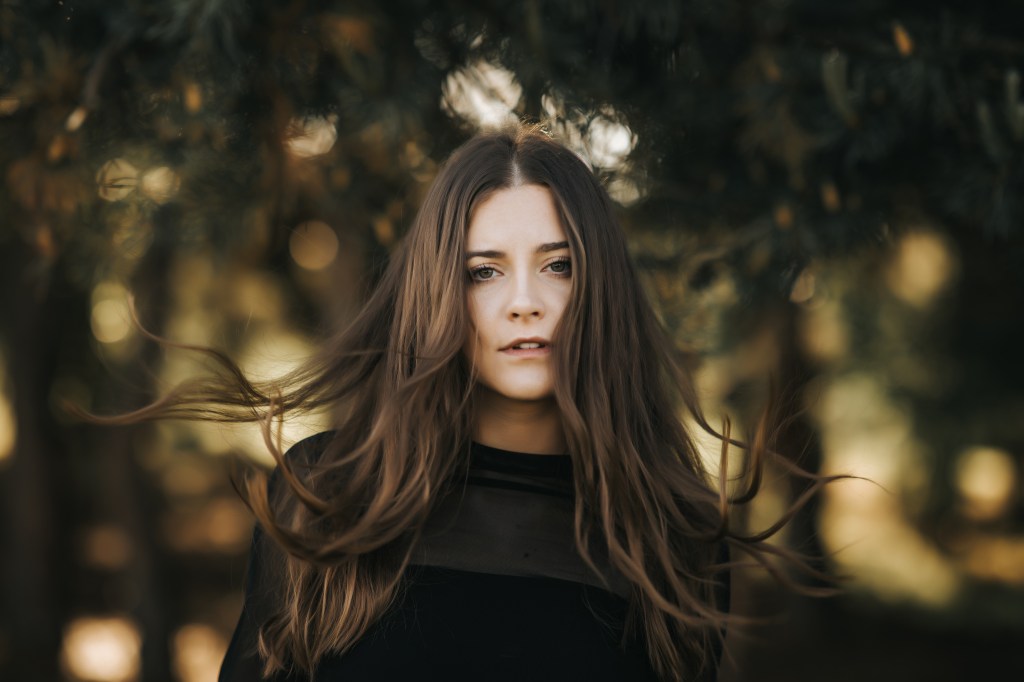
But the best way to find out more about the cool things she has done is from her, so we talked to her about her career and idols in a special interview.
What are the things people should know about you before reading this interview?
I’m the kind of person who loves new experiences, meeting different people, and exploring new places and ideas. I recharge my energy through socializing, traveling, hiking, and discovering new environments that inspire me both personally and artistically. I take all of these experiences and transform them into songs that are deeply personal to me, but that listeners can interpret and connect with in their own way. Even though they come from my own emotions and experiences, the themes and feelings are universal, and I know anyone can find their own meaning in them.
Which woman inspired you from the beginning? What have you learned from her as a model?
Many women have inspired me from the very beginning. I really appreciate that every voice is unique, and I’ve learned so much from every woman I’ve listened to. I like to explore music and listen to a variety of voices and registers, because every artist in this industry has something special to offer. It’s very important to know how to listen and appreciate that. One example that comes to mind is Aurora. She has been inspiring to me since I was a child. Her voice is incredibly angelic, and she communicates so much through her songs. What I love most about her is her authenticity she has always stayed true to herself and her style, never changing for anyone else. She is truly herself, and in that sense, she’s an icon.
Why have you chosen the music industry? Where does your passion come from?
It’s a funny story about my beginnings in the music industry. I was very little, in kindergarten, and you know the basic question people ask children: “What do you want to do when you grow up?” First of all, I was born in Dublin, Ireland, but my parents moved back to Romania when I was four years old. However, my best friend remained in Ireland. When she came to Romania to visit her grandparents, I asked her this question before answering it myself. She told me that she wanted to be a singer. Because of the distance between us, I think that moment gave me a perspective: I wanted to be what she wanted to be. I was only four years old, and I said that I wanted to be a singer too. I kept this dream for many years. When I was nine years old, my mother took me to guitar lessons because I was still convinced that I wanted to become a singer. That’s how my journey into the music industry began. I’m very grateful that everything happened quite naturally and after this I discovered that I have talent and I can do it. I started having small concerts when I was nine years old, and I even appeared on local TV shows in Bistrița. It makes me happy that an idea that first came from another person eventually became a reality for me.
Was there a moment when another woman warned you about the challenges you might face in the music industry because you’re a woman? What was your reaction?
Over time, I’ve received small hints from women who are also part of the music industry. They didn’t necessarily warn me directly about specific challenges, but sometimes they shared certain experiences in a lighter or more humorous way. For example, some stories were told almost like jokes about what it’s like to be a single woman performing at a two-day festival, or about situations where women were not always invited or included in certain events. Even though these stories were often shared in a playful tone, they still hinted at some of the realities women can face in the industry. Personally, I was never explicitly warned about the challenges I might encounter, and I didn’t feel discouraged by those conversations. Instead, I chose to focus on my own journey and experiences, while staying aware that every artist especially women can sometimes face different kinds of obstacles.
Have you faced any challenges that could only happen to women in this industry? Can you give us some examples and explain how you overcame them?
One of the challenges I’ve noticed as a woman in the music industry is that appearance and clothing are often discussed more than the music itself. Sometimes there are comments about the way female artists choose to present themselves on stage. For example, if I wear a skirt, some people might say that my legs are too visible or that it attracts too much attention. But I’ve also experienced the opposite situation when I perform in jeans or more casual clothes, there are comments like “Why didn’t you wear a skirt?” or “Why didn’t you dress more like a girl or more sexy?” So sometimes it feels like no matter what you choose, there will always be someone who has an opinion about it. Personally, I prefer to dress in a way that makes me feel comfortable and confident on stage. I don’t usually go for extravagant looks; I just choose outfits that allow me to focus on my performance. Over time, I’ve learned not to let these kinds of comments affect me. For me, what truly matters is the music and the connection with the audience, not the expectations people might have about how a woman should look on stage.
Have you ever felt pressured to present yourself in a certain way because of your gender?
Because of the experiences I mentioned before, I’ve learned not to feel pressured to present myself in a certain way just because I’m a woman. At some point I realized that no matter what you choose to do, there will always be someone who has something to comment on or criticize. Because of that, I prefer to focus on what makes me feel comfortable and authentic as an artist. Instead of trying to fit into certain expectations, I choose to present myself in a way that feels natural to me. In the end, I believe that authenticity is much more important than trying to please everyone.
What changes would you like to see in the industry to make it more inclusive and welcoming for women?
I would like to see an industry where people are supported regardless of their gender. What should matter most is what an artist expresses through their music, their lyrics, and their emotions. I would also like to see more people going to concerts, buying tickets, and supporting artists simply because they want to feel the emotion that the artist is expressing on stage, even when that artist is a woman. Women have many things to express through music as well, and I think audiences should value and support that just as much. Music should be about connection, emotion, and authenticity, not about whether the artist is a man or a woman.
How optimistic are you about the future of the music industry in terms of gender equality?
I’m quite optimistic about the future of the music industry when it comes to gender equality. One of the things that gives me hope is seeing more and more women standing out and expressing themselves through music. I’ve also noticed that many women are starting to collaborate more, create events together, and support each other in ways that perhaps didn’t happen as often in the past. Seeing this kind of connection and solidarity between female artists is very inspiring. It gives me hope to see women doing their best, sharing their voices, and growing together in the music industry. I believe that these kinds of collaborations and mutual support will continue to make the industry more balanced and inclusive in the future.
Can you share a memorable experience or achievement in your career that you’re particularly proud of?
One of the most memorable experiences in my career was being invited to perform at Sala Palatului in Bucharest, a venue with around 4,000 seats, during a sold-out show. The event was designed as a kind of “battle of generations” in folk music, bringing together artists from both the older and the newer generation of the genre. There were around twenty artists performing that night ten representing the older generation and ten representing the newer one. I was part of the new generation, and I was also one of only two women performing that evening. The rest of the artists were male performers, so I felt very honored and proud to be invited to take part in such an event. During one of my songs, I spoke to the audience about how small acts of kindness can make a difference in people’s lives, and how sometimes even a very small gesture can bring someone a moment of pure happiness. I told them that for me, a moment of absolute happiness would be if they turned on their phone lights, even just for a minute or even for a few seconds during the song I was about to perform. And they did. Seeing a sea of lights in front of me was one of the most beautiful moments I’ve ever experienced on stage. It felt truly magical, and it filled me with gratitude and emotion. It’s a moment that I would love to relive again and again.
Are there any projects or collaborations you’re currently working on that you’re excited about and would like to share with our audience?
Yes, I’m currently working on my new song called Umbre, which translates to Shadows. It’s a song that I actually wrote a few years ago, but I’m still very much in love with it, especially because of the message behind it. The song talks about a feeling we sometimes experience in our lifes. Even though we are surrounded by many people and many relationships, there are moments when we can still feel lonely. But the message of the song is that it’s okay to feel that way, because you are never truly alone your shadow is always with you. Sometimes, the most important companion you have is yourself. For this song, I had the chance to work at the studio of the band Vița de Vie, which was a very special experience for me. The song also has a slightly different style compared to my previous work it has some electronic elements, which makes it very exciting for me. I’ve also been working on a music video for it, and I’m very proud of it because it’s the first time I’ve been part of such a professional music video with an amazing crew. It was a wonderful experience, and I’m really excited to share it with the world and release it on all platforms.
Looking back on your career journey so far, what are some valuable lessons or insights you’ve gained that you wish you knew when you were starting out?
I wish I had known early on that not everyone will appreciate the work you do, only because some people are greedy or selfish. Many people don’t truly value the effort behind what you do, especially when it comes to singing. For a lot of people, singing is just a hobby, and they don’t see the work and dedication that go into it. That can be hurtful, but I’ve learned that if you are strong enough to handle it, you can face anything in this world. It’s sad that some people don’t value singing as much as other professions or activities, but staying focused on your passion and believing in yourself is what really matters.
What advice would you give to young women aspiring to pursue a career in music? But to the ones that are reading this interview?
My advice is first and foremost to be yourself. Go through life knowing that you are capable of achieving something, and only then pay attention to the people around you the ones who are watching or supporting you. The most important relationship is the one you have with yourself. If you are okay with yourself, you can be okay with others. In the music industry, you will have to navigate many relationships, and that can be one of the most challenging parts, because people can be hard to read and understand. But if you learn to handle your own emotions and stay true to yourself, you will be able to handle anything. Success in music isn’t just about talent; it’s also about understanding people, staying grounded, and moving forward peacefully while staying authentic.
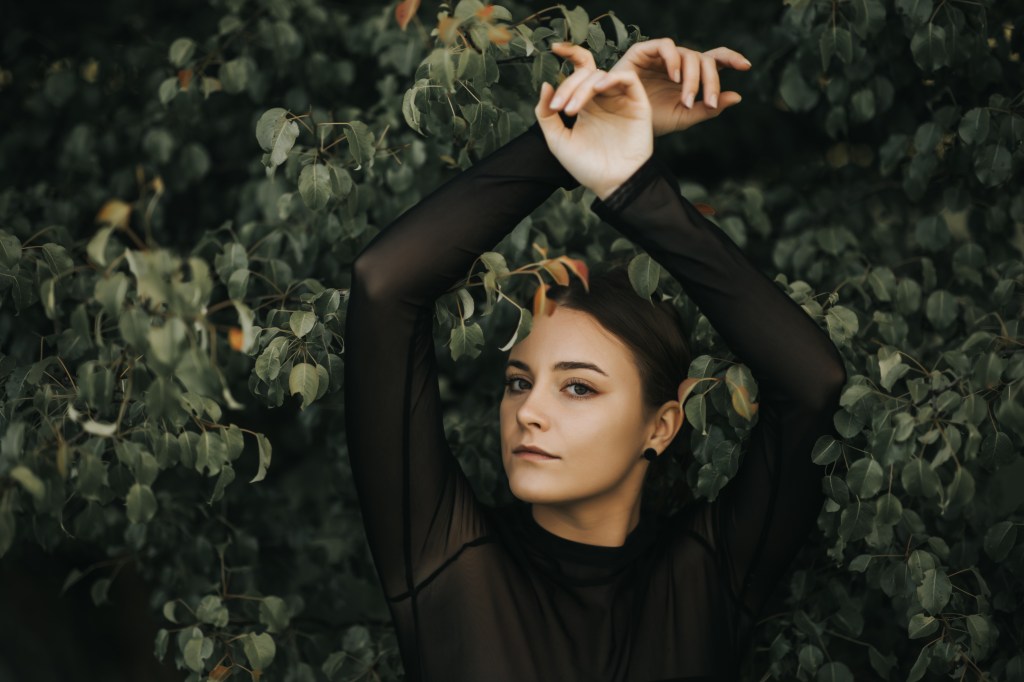
If you want to get the latest folk updates and where to catch her up in concerts, don’t forget to follow her on Instagram.
Rock Monsters Romania believes in professionalism and in the chance for women to stand out in an industry that seems dominated by men. Because of this belief, every March on our website you can find 8 women who are making waves in the music industry and offering daily inspiration and support to those around them.
Text by Ionela Pleșan
Interview by Ionela Pleșan and Radu Mihai
 Rock Monsters Romania
Leave a comment