
On June 20 and 21, the new Urban Habits festival takes place at the Mihai Eminescu Amphitheater, a free event open to all. Over the course of two days, the festival brings together conversations, debates, workshops, guided tours, exhibitions, art and new media installations, film screenings, an urban brunch, activations, and concerts in a format accessible to the general public.
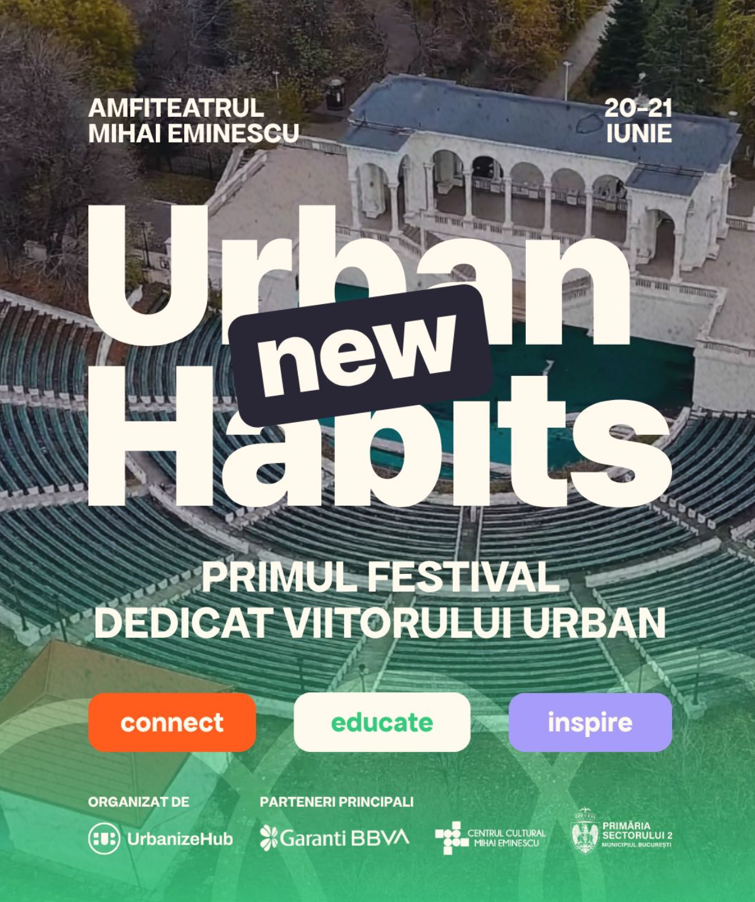
Organized by UrbanizeHub, an NGO working on issues related to cities, communities, public participation, and sustainable urban development, the festival offers a weekend open to everyone, where Bucharest is explored through conversations, workshops, urban tours, exhibitions, art and new media installations, films, an urban brunch, activations, and concerts.
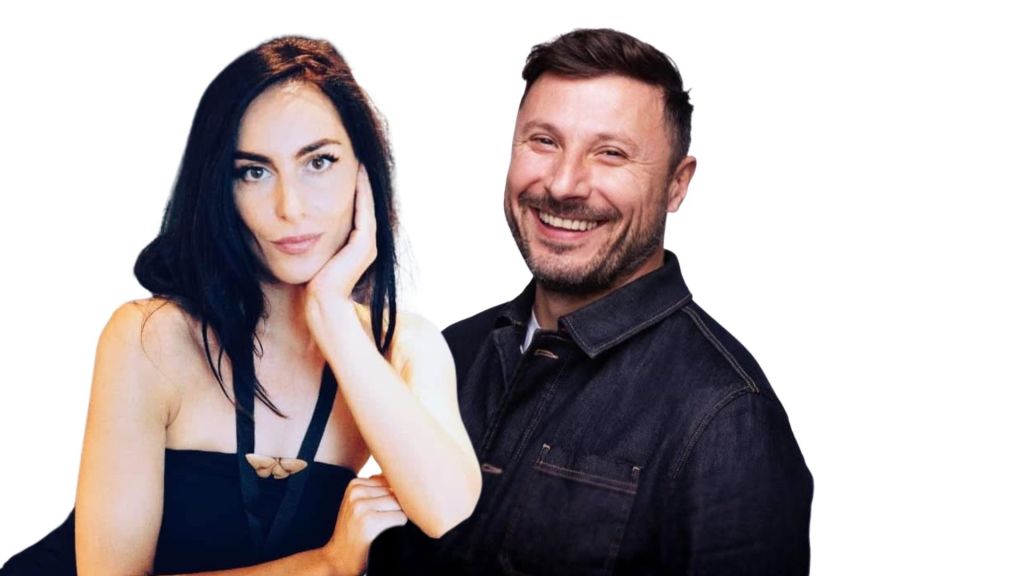
We spoke with Oana Onciu and Grațian Mihăilescu to learn more about the festival’s mission and what to expect from this year’s edition.
What inspired you to create new Urban Habits, and why do you believe this type of festival is needed in Bucharest?
I think we wanted to take the conversation about how we live in cities out of meeting rooms and bring it closer to real life. Because, you know, the city is not something only architects and urban planners should talk about. It is a bit like health: doctors may know what is good for us, but we still have to make choices and build habits that help us live healthier lives. Cities work in a similar way. Experts may understand what makes a city safer, greener, or more liveable, but people also need to understand how the city works and how they can take part in changing it. People complain a lot about traffic, pollution, heat, noise, or public spaces, which is understandable. But fewer people know what can actually be done, and even fewer take the next step and get involved. So we wanted to bring together the experts who understand what good urban development can look like, the initiatives that have already started making real changes and deserve more visibility, and people who are simply curious. Even the people who mostly come to complain are welcome. Complaining can be a starting point, as long as we turn it into a conversation about what could be done differently.
Bucharest has a lot of energy, but it also has traffic, heat, noise, pollution, and public spaces that do not always work for people. At the same time, there are many creative people and organisations already trying to change things.
new Urban Habits brings all these worlds together. And because thinking about the future of the city should also be fun, we do it through workshops, music, art, food, walks, and conversations. The subjects are serious, but the festival does not feel like a conference.
In your view, what makes a city truly people-centered?
A city that does not make everyday life harder than it needs to be.
What are some common misconceptions people have about urban planning and city-making?
Maybe that urban planning it is about buildings and complicated plans. Actually, it is about how life works and happens between walls and buildings. How you move, where you meet, how close you are to a park, a school, a market, or a cultural space. Another myth is that experts always know everything. They know a lot obviously, but people living in a neighbourhood are the ones knowing things that no map can show.
What barriers prevent cities from implementing innovative solutions, even when the solutions are well known?
There is a lot of fear around trying something new. Nobody wants to be the person blamed if an experiment does not work perfectly, you know? So institutions also often choose the familiar solution even when everybody knows it is not the best one precisely because of this fear. And, you know, cities (as most of the human fellows) often get excited about opening new projects but less excited about maintaining them. A new space usually look great in the first photos, but the real test is what happens three or five years later.
What can Bucharest learn from other cities that have successfully addressed climate, mobility or social inclusion challenges?
Is far from me the thought that we should simply copy models from other cities. But I do believe that some ingredients have already proved successful in dealing with certain problems. It is a bit like cooking pardon my comparison. Tomatoes work well with cheese and basil. That combination …. you know, and it is very difficult to get completely wrong. Cities work in a similar way. Safe streets, good public transport, shade, green space, mixed uses, and really cool public participation are all ingredients that we already know can improve urban life.
But once you understand the ingredients, you still need to create your own recipe. That is how I think we should approach good practices from other cities. Look at what they used, what principles were behind their decisions, and why those solutions worked. Then ask how those ingredients could respond to our own problems, data, culture, institutions, and everyday habits. The goal is not to copy Copenhagen, Barcelona, or Vienna. The goal is to understand what made their solutions successful and then create something that works for Bucharest.
How do you ensure that conversations at the festival lead to action rather than remaining theoretical discussions?
Well, first of all we are a little bit upside down compared to a traditional conference. We invite people to our talks who have already done big things. They are not simply presenting ideas about what cities could become. They come with real projects, and may times with real mistakes they have learned from. We think this matters because people need to see that change is possible and that somebody has already managed to move from an idea to something concrete. At the same time we do not want the audience to spend the entire festival sitting in chairs and listening to other people talk. We try to get people involved and make them do things. Participants walk through neighbourhoods, analyse streets, work with plants, food, textiles, energy systems, and public-space ideas. They draw, build, map, test, question, and discuss. Some workshops produce recommendations, maps, or concepts that can later be shared with organisations and public institutions. Others offer practical skills that people can use at home or in their communities.
And of course, we are realistic. A two-hour workshop is not going to completely transform Bucharest the next morning, and we do not want to pretend otherwise. So the festival works in both directions: we bring in people who have already proved that action is possible, and we give participants a space where they can take their own first step.
What does success look like for this festival beyond attendance numbers?
Of course, we would love a big number of people to come. An empty festival would be a little awkward isn’t so?
But right now as we speak, success means more than numbers. From my point of view, success today is about something or someone manages to break out of its own bubble. It is easy to create an event where everyone already knows each other, shares the same references, and agrees on most things. The real challenge is to bring together people who would not normally meet.
For us this means artists, urban planners, musicians, activists, researchers, children, older people, and local residents can all be in the same place and become part of the same conversation. And they may come for completely different reasons. Someone comes for a concert, someone else for a workshop, and another person is simply curious about what is happening in the neighbourhood or comes because a friend is involved. But for a few hours, their paths cross.
So, yes, attendance in numbers matters. But if you are capable of going bigger than the immediate reward, I think success is when the festival connects different worlds and makes people curious about something outside their usual circle.
Culture and concerts are playing an important role in the festival’s programme. How do culture and music complement a festival focused on urban change? Do you see cultural participation as a habit that helps cities evolve?
Definitely. Culture is part of how people experience a city and culture is part of how attractive a city is.
Music can completely change the energy of a space. It makes people stay longer, relax, meet each other and feel connected to a place. A concert can sometimes create a sense of community faster than a two-years urban project.
Culture also makes the festival more open. Someone may come mainly for the music and then discover an exhibition about climate, mobility, food or public space.
And finally, yes, I think cultural participation is an urban habit. Going to concerts, exhibitions, performances and community events makes people more smart, more open minded, more light hearted and fun and more connected. A city with an active cultural life feels more alive because people are not only moving between home and work. They are feeling and living and creating memories also.
What role do artists and cultural practitioners play in shaping more liveable and inclusive cities?
Artists often notice things that technical plans miss. They notice atmosphere, memory, emotion, identity and all those strange little details that make a place feel alive. These things are difficult to measure, but they matter a lot.
And artists can also make complex problems easier to understand. A performance, an image or an installation can make woowy themes like climate change, social exclusion or the loss of urban memory feel personal and real. They can activate spaces and bring people into places they would normally ignore. Sometimes an empty or forgotten space only needs a different use for people to start seeing its potential. And I think that when is possible, artists should be involved from the beginning of urban projects. They should not be invited only at the end to decorate something or make it look cool for the opening photos.
If you could invite any artist to perform or participate in future editions of new Urban Habits, who would it be and why?
Ha! Massive Attack? For years I secretly believed that Banksy was actually Robert Del Naja. Then, of course, the secret was open. But beyond that, Massive Attack makes complete sense. Their music has a strong urban energy and they have always understood that culture can speak about climate, politics, technology, conflict, and the way society is changing.
They can create something powerful and entertaining, but you still leave thinking about something larger. And, you know now that you asked me and made me dare to dream, it would be amazing to see them create something connected directly to Bucharest
What practical actions can participants take after the festival to help create better cities?
Start with the place you know best: you, your street or your neighbourhood.
What message would you like to share with people attending new Urban Habits this weekend? And what would you say to those who are still deciding whether to come?
To the people coming, I would say: come curious and come to enjoy a beautiful space. Do not feel like you need to understand urban planning or sustainability before you arrive.
And to those who are still deciding: come for whatever sounds good to you.
We have an amazing concert on 21th and a surprise musical apparition on 20th. Maybe it is the food, a walk or just the atmosphere. We provide a nice atmosphere. You do not need to arrive with a big plan. Come, spend some time with us and see what happens.
If they convinced you, why not join the festival for a weekend that’s a little different? Enjoy great music, discover new ways to live better, and learn how to make more informed choices about your city.
Interview by Radu Mihai
 Rock Monsters Romania
Leave a comment