
Review by Denisa Ruzsa / Photos by Bogdan Draghici
Some festivals chase trends and others build a community. Rock la Mureș continues to prove that it belongs in the latter category, bringing together an eclectic mix of punk, hardcore, alternative rock, goth and metal on the banks of the Mureș River. Held on July 10–11 at Periam Port, the 14th edition of Rock la Mureș embraced darker aesthetics than ever, with goth and post-punk influences running through much of the lineup while still leaving plenty of room for explosive hardcore energy and singalong punk anthems.
Friday, 10th July
Opening a festival is never an easy task, but Romanian alternative metal band Fittonia stepped onto the Marosch stage with confidence, delivering a set that balanced familiar material with exciting glimpses into the band’s future projects.
The first time Rock Monsters Romania wrote about Fittonia was only a few years ago, when they were still a young band finding their place on the Romanian alternative metal scene. Even then, what stood out was their determination to perform, their ability to command a crowd, and the chemistry between the members. It was obvious they had potential.
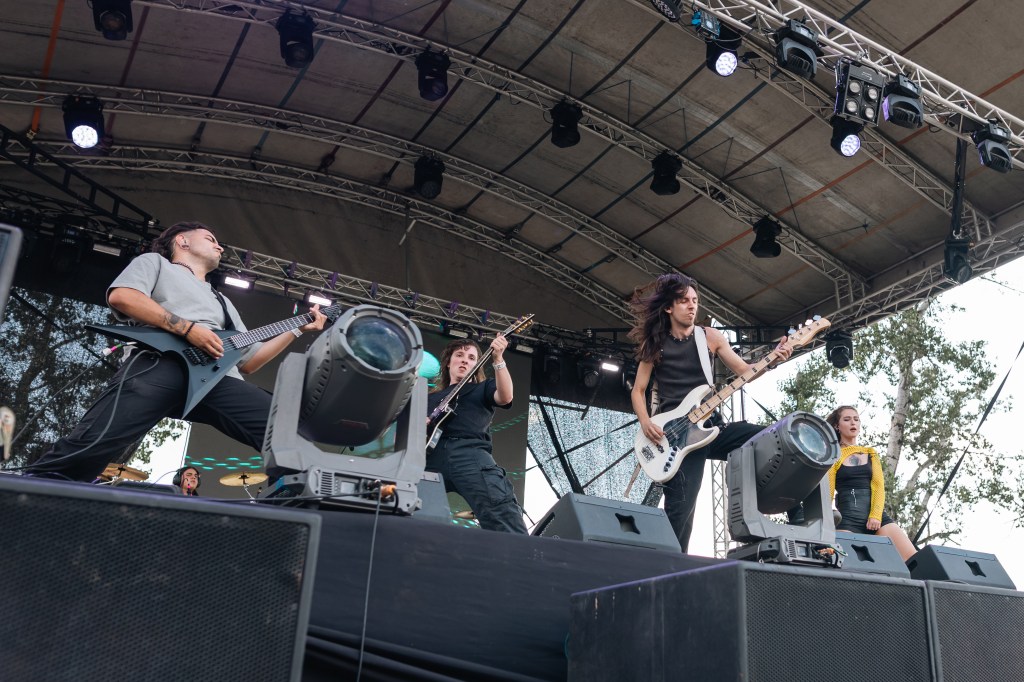
Fast forward to today, and that potential has evolved into something far more refined.One of the biggest changes is the addition of Brândușa Brumbea as the band’s vocalist. Before finally seeing this lineup live, I had heard countless people praise her voice and stage presence. Every single one of those compliments proved to be true. Brândușa is, without question, one of the finest female metal vocalists in Romania today. Her voice is commanding, versatile, and incredibly powerful, but what truly leaves you speechless is the complete package she brings to the stage.
She doesn’t simply sing the songs, SHE OWNS THEM. Her attitude, relentless energy, and commanding stage presence make it impossible to look away. Yet what impressed me even more wasn’t just her individual performance, but how naturally she fits into the band’s dynamic. Every member complements the others, creating the feeling that Fittonia has reached a new level of maturity.
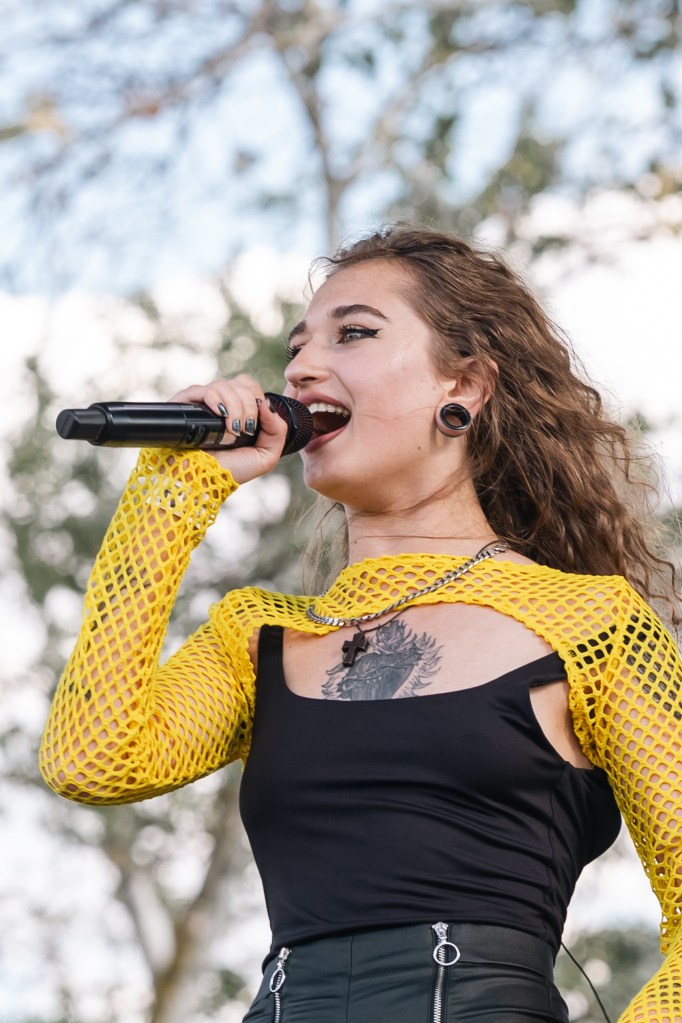
This brings me to something that many people may not immediately notice when watching a concert: being a professional band is about much more than playing the right notes or having great songs. Plenty of bands sound good live. What separates the truly professional acts is the complete live experience they deliver, regardless of whether they’re playing in front of fifty people or five thousand. Let me explain to you real quick what professionalism means for me: professionalism means a tight, polished sound, but it also means stage awareness, interaction with the audience, body language, facial expressions, energy, confidence, and the ability to make every single person feel like they’re witnessing something worth remembering.
And Fittonia understands this.Every movement on stage feels intentional without ever seeming rehearsed. The interaction between the members feels natural, the energy never drops, and the audience receives the same level of commitment from the opening song to the encore-worthy finale. That is what makes a band memorable, not just technical ability, but the feeling that every performance matters.
While the musicianship continues to improve with every performance, the band also keeps surprising audiences with new material. Songs like „Camera Goală”, a brand-new track set for release soon, premiered live at Rock la Mureș ahead of its official release and, judging by the audience’s reaction, may quickly become another staple of the band’s catalogue. Alongside the emotionally charged „Rană Vie”, it shows a band that refuses to remain creatively stagnant.
If there is one criticism to be made, it isn’t directed at Fittonia but at the festival schedule. Their set deserved a later slot. Playing in the late afternoon, under the blazing summer sun, certainly didn’t stop people from gathering in front of the stage, but it’s hard not to imagine how much more impactful their performance would have been after sunset, with a larger crowd and the atmosphere that their music naturally creates.
If this performance proved anything, it’s that Fittonia is no longer just a promising Romanian metal band. They have grown into a confident, polished live act that continues to raise its own standards with every show and they don’t look ready to stop anytime soon.
Closing with „Omoară-mă în Eden”, Fittonia wrapped up their set, opening Rock la Mureș in the best way possible.
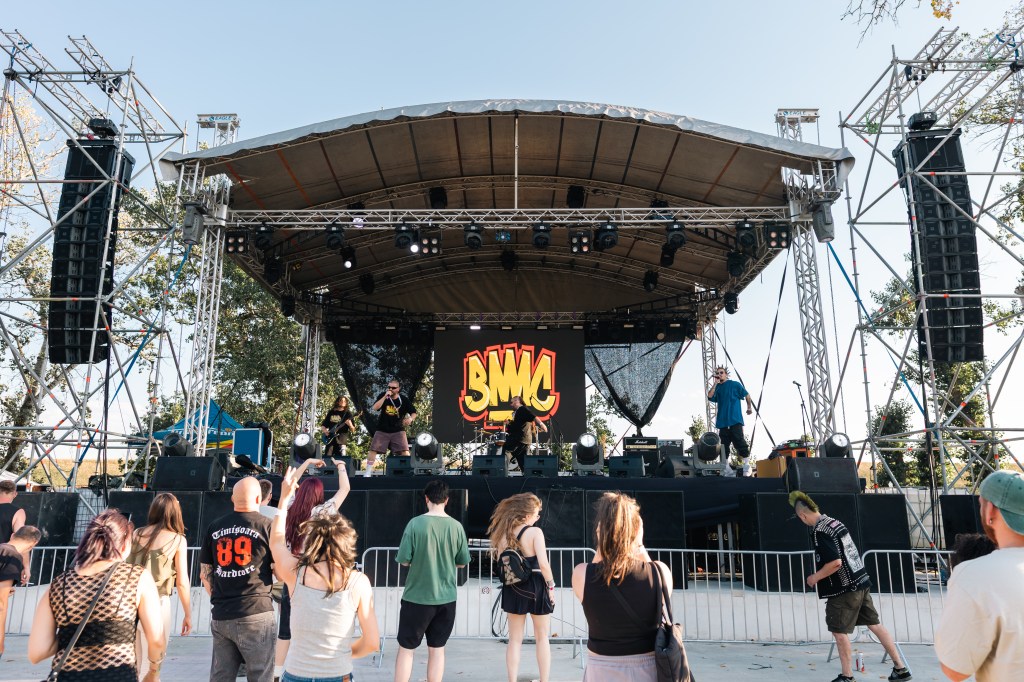
Following Fittonia, Brigada Muzicală Contemporană (BMC) took the stage, bringing a completely different flavor to the festival. The Bucharest collective seamlessly blended hip-hop, electro, rock, and rapcore into a high-energy performance, backed by a full live band. Fronted by Fratele Lu Chan, Breloc, and Dilimanjaro, who for their live shows, are joined by Mihai Duță on drums. The band delivered razor-sharp lyricism, heavy grooves, and infectious stage energy. Their set offered a refreshing contrast to the metal-heavy opening of the festival while keeping the crowd’s energy at full throttle.
Darkness after sunset
Next up were Raskolnikov, a Swiss-Spanish-French band whose sound blends overwhelming shoegaze with somber post-punk, creating a dark, immersive atmosphere. Named after the protagonist of Fyodor Dostoevsky’s Crime and Punishment, the band has been crafting melancholic, introspective music since 2015.
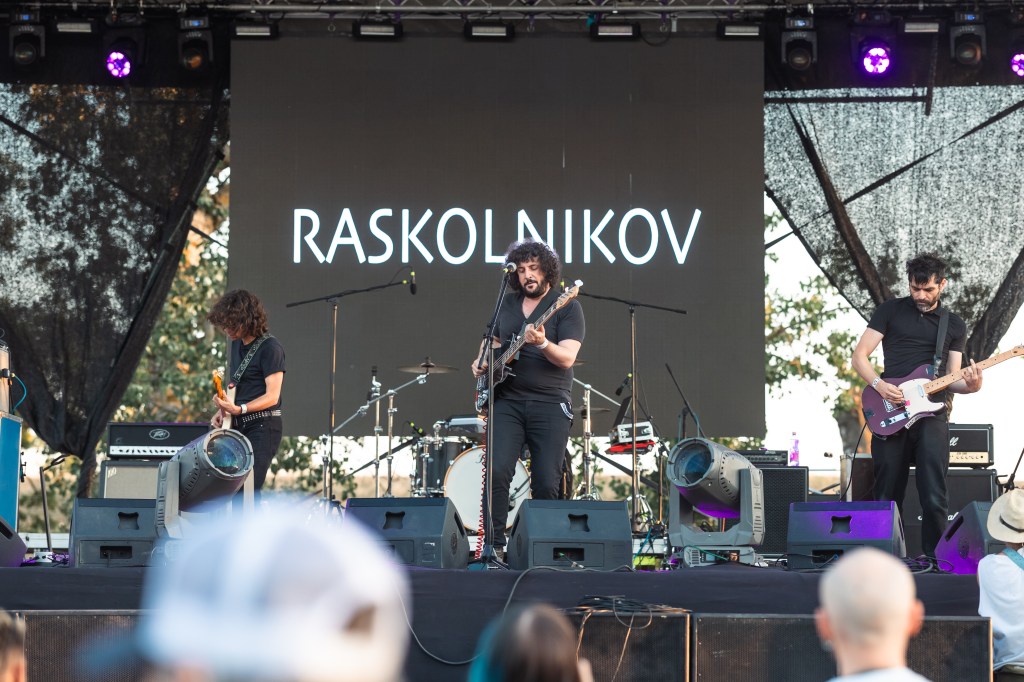
This was my first time experiencing a shoegaze band live, and they completely exceeded my expectations. Their performance was mesmerizing, with layers of reverb-soaked guitars and hypnotic melodies washing over the audience. Equally impressive was the sound production, every texture and detail came through with remarkable clarity, allowing the band’s dense, atmospheric sound to truly shine. It was one of those performances where both the band and the sound engineers deserved equal praise.
Next came one of the festival’s most anticipated acts, Lone Assembly. The Swiss quartet more than lived up to the hype, having a captivating performance that seamlessly blended melancholic post-punk, new wave, and synthpop into a cinematic live experience.
What stayed with me long after the concert ended were Raphaël’s haunting vocals. Deep, emotional, and effortlessly commanding, his voice became the centerpiece of a set built on thunderous basslines,reverb-soaked guitars, hypnotic rhythms, and atmospheric synths. Every song carried a sense of emotional weight while remaining incredibly danceable, a balance that Lone Assembly has clearly mastered.
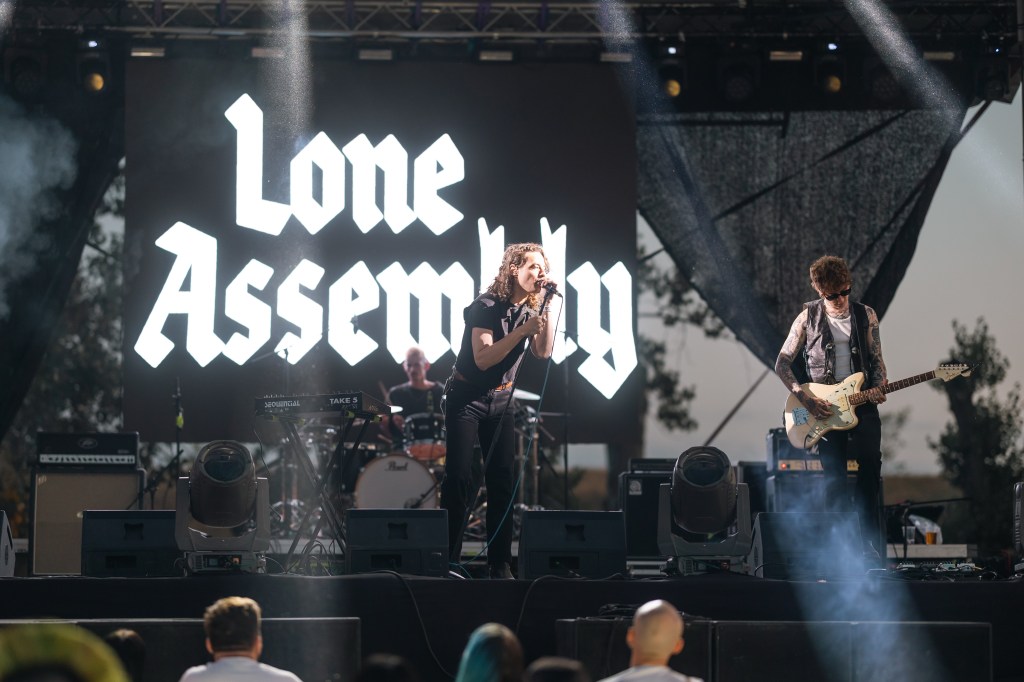
Their live performance felt immersive from beginning to end, drawing the audience into their dark, melancholic world. It was one of those rare concerts that linger in your mind long after the final note fades, proving exactly why so many fans had been so hyped to see them at Rock la Mureș.
Closing out Friday night were Native James from Ipswich. And they absolutely tore the place apart. From the moment they stepped on stage, the alternative rap act blurred the lines between hip-hop, grime, punk, rock, metal, and garage, creating a sound that was as unique as it was explosive.
From the very first song, the crowd was completely locked in. The frontman of the band, aka Aaron James, proved impossible to ignore, constantly interacting with the audience and feeding off its energy while the band delivered a crushingly tight performance behind him. Their chemistry was undeniable, and every transition between rap verses, heavy riffs, and massive breakdowns felt effortless.
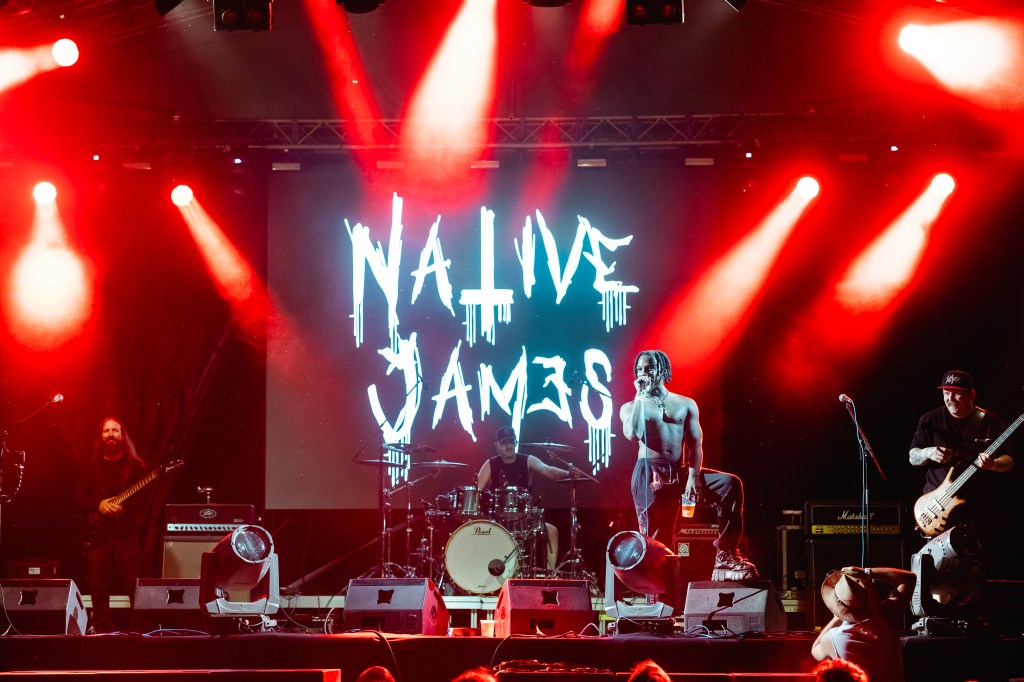
Their set was a masterclass in controlled raw, aggressive, emotional, and impossible to ignore. Every breakdown hit hard, every transition landed perfectly, and the band’s energy never let up. Native James’ charisma, combined with the group’s razor-sharp musicianship, created an atmosphere that was equal parts chaotic and exhilarating.
By the time the final song came to an end, there was little doubt that Native James had delivered one of the standout performances of the entire festival.
Saturday, 11th July
The second day of the festival maintained the momentum with an equally diverse lineup.
Saturday kicked off with Pârnaie, and there couldn’t have been a more fitting way to open the day’s lineup. The Romanian hardcore punk quartet wasted no time, launching straight into a relentless set fueled by energy. The band features Răzvan on vocals, Radu on guitar, Stan on bass, and Yunus on drums.
Known for their raw take on hardcore punk, Pârnaie balances blistering riffs with lyrics rooted in social realities and everyday frustrations. Their songs are built on tension and release rather than chaos for chaos’s sake, giving every track a sense of purpose that resonates just as strongly live as it does on record.
What stood out most was the band’s ability to immediately wake up the festival grounds. Even early in the day, they managed to pull people toward the stage, proving that honest, high-intensity punk needs little more than conviction to connect with an audience. Their chemistry was tight, their performance intense, and their delivery never let up from beginning to end.
One thing I have to mention, because it genuinely stood out, was their merchandise. When many bands rely on AI-generated artwork for shirts, posters, and album visuals, Pârnaie goes in the opposite direction. Everything about their visual identity feels handcrafted, DIY, and authentic. From their album artwork to their merch designs, there’s a coherent artistic vision that reflects the band’s ethos instead of chasing trends. It’s refreshing to see a band investing so much thought into every aspect of their identity. Well done, guys.
Pârnaie is a reminder why Romania’s hardcore punk scene continues to thrive without overused nostalgia, but through bands willing to channel frustration into something authentic, energetic, and impossible to ignore.
As +SHE+, the bold and deeply personal musical project of multidisciplinary artist Corina Sucarov, took the stage alongside Milan (guitar), Larra (drums), and Vlad (guitar), the weather added an unexpected layer to the performance. Just as the set began, rain started to fall, creating an eerie, almost ethereal atmosphere. Against the grey sky and the rain, Sucarov seemed almost ghostlike, her haunting presence perfectly complementing +SHE+’s darkwave and post-punk sound.
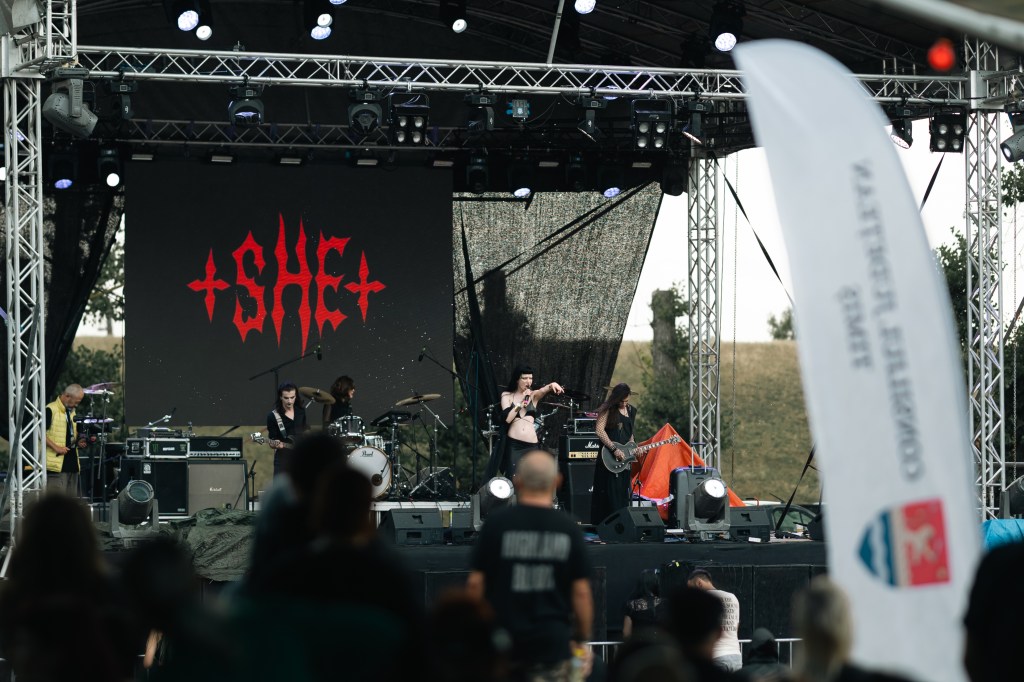
Before she is a vocalist, Sucarov is undeniably a performer. Her stage presence immediately reveals an artist who deeply respects her craft. Every movement felt intentional, like every visual element was carefully selected, and the entire performance carried a strong theatrical quality that was complemented by Gabriela Cristea’s expressive performance as Sucarov’s pet. I could say that the concert transcended the format of a traditional live show, becoming quite a multidisciplinary artistic experience.
Sucarov’s voice is truly one of a kind: fragile yet commanding, delicate yet powerful enough to hold the audience in complete silence. Midway through the set, she paused to deliver a heartfelt message about believing in love, unity, and the importance of communities like Rock la Mureș. She spoke about how spaces like these can become a refuge from the negativity and division surrounding us, places where people can come together to create understanding, empathy, and love. It was a brief speech, but one that resonated just as deeply as the music itself.
Next up, the lineup took a different turn as Slovenian hardcore punk veterans Odpisani, originally formed in 1995, hit the stage with the same intensity that has defined the band for decades. The current lineup: Aleksej Oslaj (vocals), Mario Tomaskovic (guitar), Saša Dolgov (drums), and Jože Pal (bass), delivered a performance full of raw energy despite being met with frustrating technical issues.
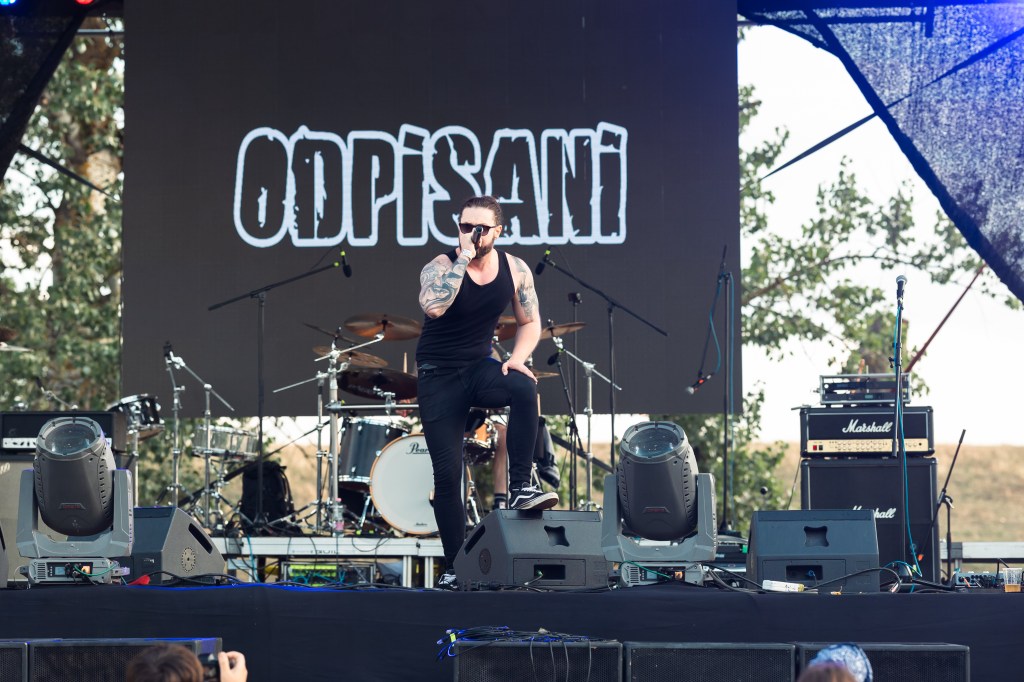
Unfortunately, sound problems affected parts of their set, but the band refused to let the setbacks define their performance. Their determination to push through was evident, maintaining their intensity and commitment from start to finish and proving the resilience that has kept Odpisani a respected name in the regional hardcore scene for over three decades.
If one band completely won over the crowd through sheer positivity, it was The Cloverhearts. The band brought a refreshing dose of celtic punk to Rock la Mureș, blending high-energy punk rock with the unmistakable sound of the bagpipes and tin whistle, a combination I had never experienced live before. And to be honest, it worked brilliantly.
The band’s international lineup features Sam Cooper on lead vocals and songwriting, Chiara De Sio on tin whistle and bagpipes, Luigi “JJ” Bassi on guitar and backing vocals, Stefano “Cione” Becce on bass and backing vocals, and Christian Amendolara on drums and percussion. Led by the charismatic Sam Cooper, The Cloverhearts generated one of the festival’s liveliest atmospheres. Their songs that often are celebrating friendship, beer, and good times, felt tailor-made for a festival setting, the crowd quickly embraced the infectious energy, singing along, dancing, and responding enthusiastically to every invitation from the stage.
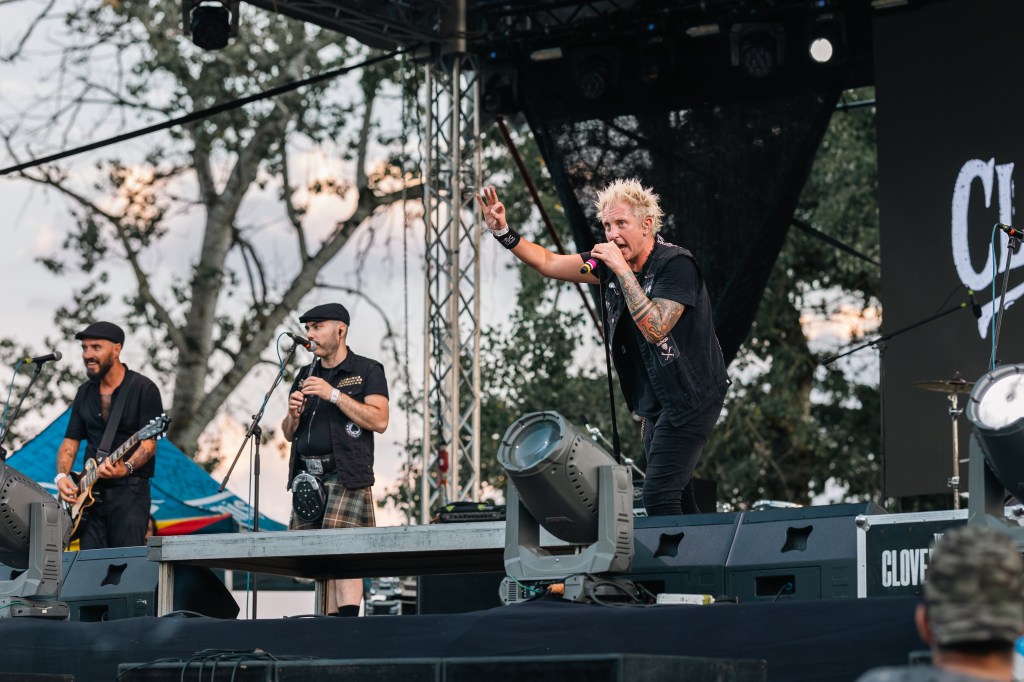
Rock la Mureș has always had a soft spot for bands that know how to entertain as much as they know how to play, and The Cloverhearts fit that description perfectly. Their interaction with the audience felt effortless and genuine, while the musicianship remained consistently tight throughout the set. Every detail from their stage presence and facial expressions to the way they built excitement between songs reflected a band that understands what it takes to deliver a truly professional live show. Fun, energetic, and impossible to stand still through, The Cloverhearts delivered one of the most memorable performances of the weekend.
If I had to pick one favorite band from the entire festival, it would undoubtedly be Ductape. I don’t think I’ve ever added songs to one of my playlists so quickly after hearing a band live. From the first notes, I was completely captivated.
Formed in Istanbul in 2019, Ductape is the darkwave and post-punk duo of Çağla and Furkan Güleray. With melancholic melodies, pulsing basslines, atmospheric synths, and lyrics in both Turkish and English, they create a sound that feels nostalgic yet strikingly modern. Their music is emotional without becoming predictable, drawing clear inspiration from the ’80s while maintaining a distinctive identity of its own.
Live, Ductape was simply mesmerizing. One of the most impressive aspects of their performance was how unbelievably accurate they sounded live. It genuinely felt as though I was listening to their studio recordings, yet with all the emotion and intensity that only a live concert can provide. Achieving that level of consistency is rare, and Ductape just did it effortlessly.
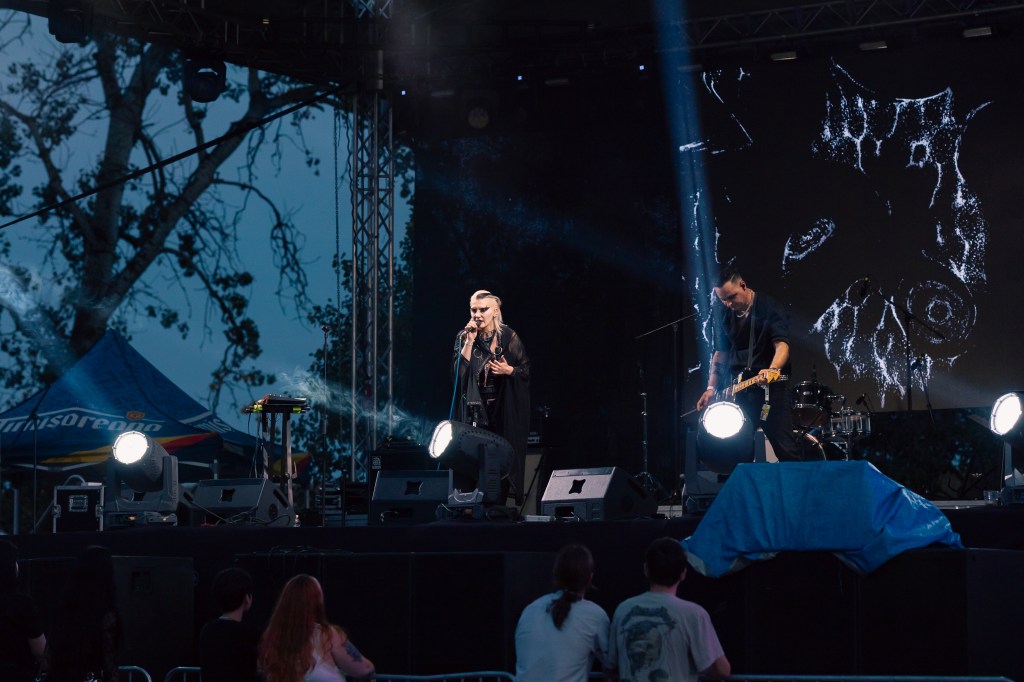
At the center of it all was Çağla. Her stage presence is difficult to put into words, commanding without being theatrical, captivating without trying to steal the spotlight. Every movement felt very natural, almost effortless, she made you feel every word, and her energy radiated throughout the audience. She has the kind of presence that makes it impossible to look away.
There’s something incredibly addictive about Ductape’s music. Long after their set had ended, I found myself humming the melodies, and before leaving the festival grounds, I had already added most of their discography to my playlist. For me, they were the discovery of Rock la Mureș 2026 and, without question, one of the highlights of the entire weekend.
Bringing Rock la Mureș 2026 to a close were Rat Boy, the UK project led by Jordan Cardy. Blending indie rock, punk, hip-hop, and electronic influences, Rat Boy has built a reputation as one of the defining names of Britain’s modern alternative scene, known for turning everyday observations and personal stories into energetic, genre blurring songs.
Their festival-closing set was undeniably solid. The band sounded great, the mix was clear, and the performance was tight from start to finish. It’s easy to understand why they’ve played major festivals such as Glastonbury, Reading & Leeds, and Coachella; the musicianship and experience were evident throughout the show.
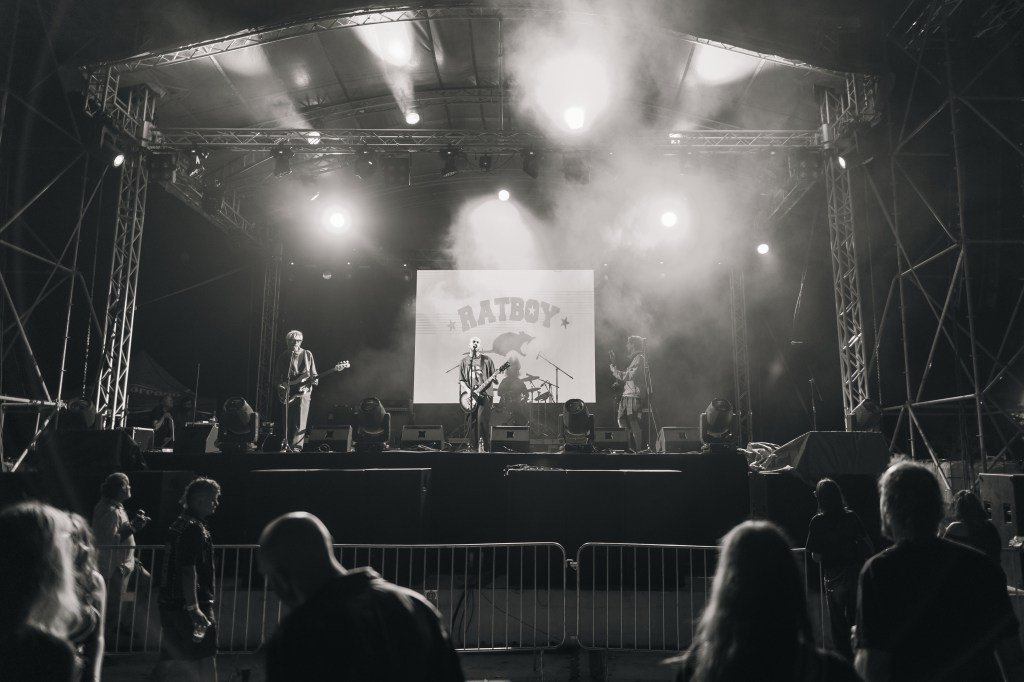
That said, I couldn’t help but feel that the band’s reputation slightly overshadowed the performance itself. Considering the hype surrounding Rat Boy, I expected a little more in terms of stage presence or moments that would truly set the concert apart. While the set was thoroughly enjoyable and professionally delivered, it never quite reached the level of surprise or excitement that some of the weekend’s other performances did. Still, Rat Boy provided a strong ending to the festival. Their infectious blend of indie, punk, and hip-hop kept the audience engaged until the very last song, closing the weekend on a high note, even if the performance didn’t become one of its defining moments.
With my journey at the Marosch Stage coming to an end, I also have to mention the Cubici Stage, which became the perfect place to end each festival day. Curated by DJ Padre and Corina Sucarov (on the second day of the festival), the afterparty embraced the dark musical aesthetics of the 1980s and 1990s, taking festivalgoers through post-punk, darkwave, synthpop, new wave, and goth.
A special mention goes to DJ Padre, whose carefully curated selections kept the dancefloor alive until late into the night.
Rock la Mureș 2026: Where the Underground Feels Like Home
One noticeable characteristic of this year’s edition was the strong presence of goth and post-punk influences throughout the lineup. Acts like Lone Assembly and Ductape contributed to a darker sonic landscape that contrasted beautifully with the raw aggression of hardcore bands and the infectious spirit of punk rock.
Despite the unfortunate cancellation of Mexican punk band Acidez, the festival never lost momentum. The remaining lineup more than compensated, offering two days packed with memorable performances, passionate crowds and an atmosphere that continues to distinguish Rock la Mureș from larger commercial festivals.
Rock la Mureș keeps investing in authenticity, underground culture, and carefully curated lineups. It also feels like the organizers genuinely listen to their audience and take feedback seriously. Last year, I pointed out issues with the technical side of the festival, some bands simply didn’t sound as good as they deserved and I also criticized the camping area, which felt overwhelmed by constant police checks.
This year, those concerns seemed to have been addressed. The overall sound quality was noticeably better, allowing the bands to shine, and while police and law enforcement maintained a visible presence throughout the festival, the atmosphere never felt intimidating. The camping area felt much more relaxed, making for a far more enjoyable experience.
Judging by this year’s edition, that philosophy continues to pay off. Rock la Mureș 2026 was filled with great music, wonderful people, and plenty of art, a reminder that festivals thrive when organizers are willing to listen to the community that keeps them alive. I’m already looking forward to next year’s edition and can’t wait to see what Rock la Mureș has in store for the future.
Editor: Radu Mihai


Leave a Reply