
The first edition of Stray Lights Festival brought together the contemporary alternative music community at Control Club
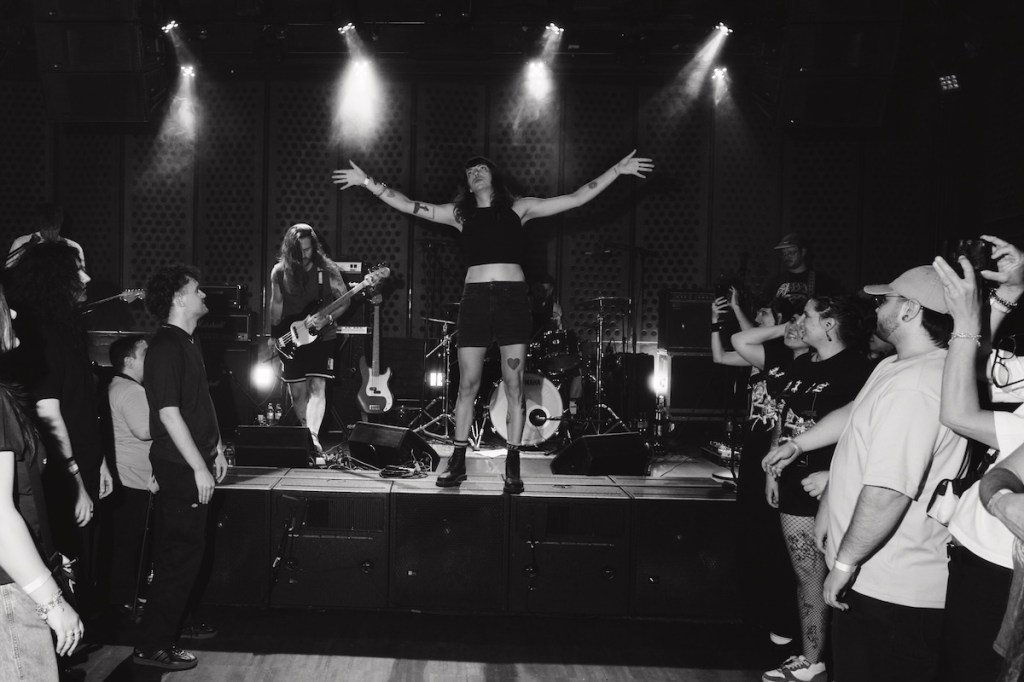
Between July 31 and August 2, Stray Lights Festival and Control Club turned Bucharest into a meeting point for artists, listeners, and music industry professionals who believe that alternative music needs not only stages to be performed on, but also contexts in which it can be discovered, discussed, and supported. The festival’s first edition brought nine of the most exciting names from the new generation of European and Romanian alternative music to the Berlin Room: The Murder Capital, DITZ, The 113, Orkid, Baby Elvis, Brainwasher, Second Wave, Asincron, and Black Water.
Three days of concerts and musical discoveries
Over the course of three days, audiences moved naturally between shoegaze and post-metal, noise rock, post-punk, emo, dream pop, and hardcore, in a programme built around the diversity of the contemporary alternative scene. Performances by The Murder Capital, The 113, and DITZ delivered some of the festival’s most intense moments, while Brainwasher, Second Wave, Baby Elvis, and Asincron demonstrated that the new generation of Romanian alternative music is more diverse and daring than ever.
Some of the best moments happen without ever making it onto the schedule. That was the case before The Murder Capital’s show, when frontman James McGovern improvised a DJ set featuring music that had influenced him, turning Front Control into a space for listening and discovery—exactly in the spirit of Stray Lights.
How do you build a scene?
Beyond the concerts, Stray Lights Festival also hosted three Industry Talks dedicated to the people who make music happen: artists, organisers, promoters, and audiences.
In a conversation between Adrian Despot and Vlad Ilicevici, the discussion began with the responsibility each artist has towards their own journey and moved on to the ways in which a community is built over time.
Adrian Despot spoke about the discipline required of a band that wants to endure:
“If you want to make a living from music, you have to treat it like a job. Wake up every morning at nine and rehearse, compose, work for your band as if this were your profession.”
He also emphasised that a scene cannot be planned from behind a desk:
“I don’t think a community can be forced into existence. It forms organically and spontaneously, when the right context and the right moment come together.”
In the second conversation, Vlad Ilicevici and Victor Dadaciu discussed the challenges facing the Romanian alternative scene and the need for collaborative structures between artists.
Victor Dadaciu spoke about one of the most important goals of an independent music community:
“In Romania, there simply aren’t enough people listening to alternative music yet. An audience has to be built over time, step by step.”
For his part, Vlad Ilicevici drew attention to the lack of support for music that is still at the beginning of its journey:
“The real problem is that in Romania, public and private institutions, as well as promoters, radio stations, and clubs, do very little for music that isn’t already successful.”
The final Industry Talk, led by anthropologist Radu Umbres, shifted the conversation from the industry towards people. Starting from the ways communities emerge, the discussion explored music’s role in forming social relationships and in the development of cultural scenes.
Together, the three conversations outlined the same idea: a music scene is not built by artists alone. It emerges when audiences, organisers, cultural spaces, and communities choose to invest time, trust, and patience in a shared project.
A community that keeps moving forward
The same idea was reflected in the statements shared by the artists ahead of the festival.
For British band The 113, independent festivals are places where music communities connect with one another:
“Festivals like this help bands connect with underground scenes in other cities and countries, not just in the places they come from.”
Baby Elvis believe that the future of a scene depends, above all, on the relationships between the people building it:
“We’d like to see more trust, more communication, and more support between bands, promoters, organisers, and the spaces that host concerts.”
Meanwhile, the members of Black Water spoke about the importance of belonging to such a community:
“It’s very important to be part of a community where people try to support one another as much as possible.”
And The Murder Capital perhaps summed up most simply why people continue to go to concerts—and why there needs to be space for alternative music:
“If you come with an open mind and an open heart, live music can change you.”
A beginning
The first edition of Stray Lights Festival was built around the belief that alternative music needs contexts in which it can be discovered, and that people need places where they can come together around it. For three days, those contexts existed at Control Club through concerts, conversations, vinyl listening sessions, and encounters that continued long after the official programme had ended.
At the same time, the festival was a natural continuation of the work started by the Stray Lights community in recent years: creating contexts in which independent bands can meet, collaborate, and reach new audiences. The concerts, Industry Talks, and listening sessions were all part of the same idea—that a music scene is built not only on stage, but also through conversations between people, the relationships that form, and the trust a community develops over time.
The first edition does not mark the end of a project, but the first step in a long-term journey. Stray Lights aims to continue bringing together artists, audiences, and industry professionals, creating new opportunities for the alternative scene and contributing, step by step, to the development of a community that already exists and continues to grow.
Organiser: Stray Lights Community
Strategic Partner: Control Club
Partners: Carlsberg, Jack Daniel’s, Jägermeister
Booking Partner: OneDay
Ticketing Partner: Eventbook
Media Partners: Radio Guerrilla, Cărturești, Clivaj, CVLTARTES, Happ.ro, Infomusic, Matca Literară, Observator Cultural, Polifonic, Rock Monsters, Subversiv, Sunete, The Interwission, Thy Art Noise, Trăiește Muzica, Utopia Balcanică, Zile și Nopți.


Leave a Reply